Approaching Hybrid: In Workshop with Poet Bhanu Kapil
Memoirist Sarah Townsend explores the ways we write around the edges of ourselves

With the brief instruction to remove something we came with, my body begins to tremble: an internal vibration spreading to the edges of my fingertips. I listen to you intently as tears fall in small rivulets…
Welcome to Writer In The World, the Wednesday section of Aimee Liu’s MFA Lore. This curated collection of essays on the writing life and videos of Writers in Conversation is produced by acclaimed MFA faculty and alumni. Today’s post takes you deep inside a prototypical Goddard MFA workshop with internationally acclaimed Bhanu Kapil, winner of the Windham Campbell Prize for Poetry in 2020, and currently a fellow of Churchill College, Cambridge.
Aimee’s MFA Core essays on the craft and business of creative writing will drop each Saturday. And her free Metaphortography Writing Prompts post every Monday.
As an MFA Lore subscriber you can join our community and elect to receive some or all of these sections each week.
Save the Date!
This Saturday! April 11, 2026, at 10am PT/ 1pm ET
Loreate Zoom Salon for Paid Subscribers
All paid subscribers are welcome as we discuss the thorny issues bedeviling our collective writing life. Consider this online space your Loreate Salon.Please RSVP in the chat using this link:
You ask what meaning we assign to hybrid. When it is my turn, I respond that I see hybrid as a spiral, a structure that returns on itself as it cycles forward and backward.
Hybrid: a Fragment for Bhanu Kapil*
by Sarah Townsend
I speak to you through a body that trembles as you suggest that we, some eight members of a seminar, remove something we came with, let something go. Then, glancing around the room, you realize it’s summer and our options for disrobing are limited: a watch, a ring, a bracelet? You explain that it would be an acceptable act of transgression to remove our shoes—should we elect them—and set them on the table for writing as an act of boundary alteration. Once you have seen the boundary, you have already crossed it: Heidegger, you say. I take off my shoes and set them on the table. Here I reach the curved edge at the bottom of the page in my notebook, where I tore off a section of paper on a previous day to write myself a note. A note that is a list of things I heard you say, and now a poem:
I want a work that touches itself everywhere at once
a writing that hasn’t been written yet
a mantra
a calling out to something
a mode of descent.
How do we write to the edge of something?
What is it that you have not written yet
that you avoid at all costs? Embark upon this writing.
With the brief instruction to remove something we came with, my body begins to tremble: an internal vibration spreading to the edges of my fingertips. I listen to you intently as tears fall in small rivulets and mucous runs from my nose, which I deliberately swipe with the back of my hand, hoping that no one, you especially, is noticing my apparent eruption, but sensing also that you must see or it wouldn’t be safe to be in your presence. I fumble for a tissue, a napkin—none—and ultimately wipe my nose with the right sleeve of my cotton shirt. I excuse myself to the restroom after first asking if there is one.
How do we write to the edge of something? you ask. And when I am asked to define monster, I tell you, still choking, The monster is me.
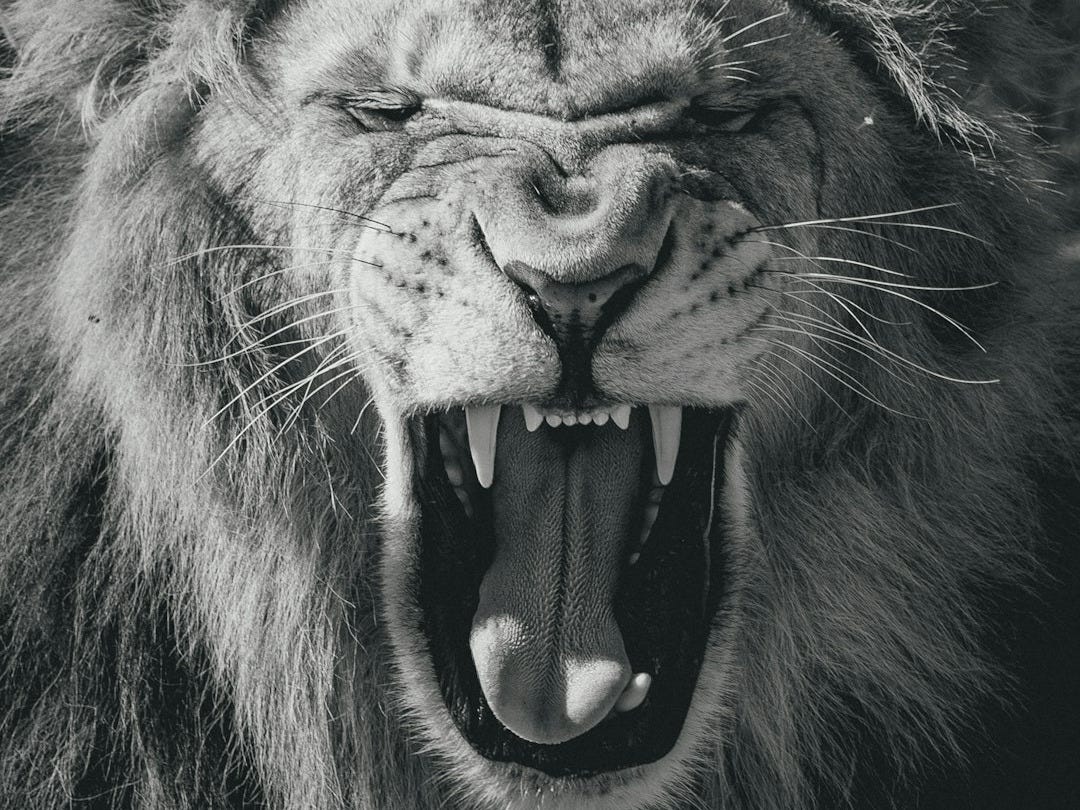
When you invite us to envision ourselves as cats—a request that I might resist under different circumstances—I see myself as a large and ferocious animal. I see the long span of the throat and teeth, the mouth wide open. I see this from the inside. When it is my turn to speak, I tell you that I cannot identify the breed of cat because I am inside of it, and each time I imagine or feel that I can see an exterior, stripes, a mane, it confounds me by shifting. You have now said everything I had hoped to teach on the subject of hybrid, you say. If you would like to leave and sit on the beach, feel free to do so. I am not the only person you will say this to today. I cling to you and to the room that is a chapel on a former military base. A student has constructed an altar where I recall seeing sage, a bowl of salt water, and The Undercommons. If I were a poet, like you, I might see the details in memory more clearly. I feel that you very much want to stay, you say to me, looking directly into my eyes. My trembling has quieted for the moment, and I am relieved. Of it.
You ask what meaning we assign to hybrid. When it is my turn, I respond that I see hybrid as a spiral, a structure that returns on itself as it cycles forward and backward. You point to a spiral drawn with plant material on the table across from me. It is a remnant from a workshop where you’ve read Mei-mei Berssenbrugge’s Hello, the Roses. Or so I understand from the workshop description. I wasn’t there. The spiral is the sole inscription on the tables where we rest our notebooks and, formerly, our shoes, and for this reason, its importance seems: heightened. The tables themselves refuse to follow a predicted geometry. Sets of two, joined at right angles. Toward the middle of one side, the side where you sit, there is space between the tables, a seam of white space running down the center. A student, just entering, begins pushing one table toward the other, but then defers, concluding the arrangement is intentional. I am interested in the creation of new forms, you will tell us.
Another student, a visual artist, describes how she begins a sculpture with a flat surface, building it up with objects that initially seem unrelated but, over time and in juxtaposition, gather meaning. The young woman sitting next to her says that she would like to write in a way that is not hybrid but is infused with hybrid. You have also just expressed everything that I had hoped to say to you today. You, too, should feel free to leave the room and head to the waters of Puget Sound. You observe and then cause us to observe how the flow of conversation in the room is itself moving in a spiral pattern, initially progressing in succession from one person to the next and then tucking back before moving forward.
You ask us to define monster. I missed this instruction while in the bathroom. You have also asked us to say our name and the kind of paper we would like to print our manuscript on. I have also missed these instructions, but you will repeat them to me later, to clarify.
The definition of monster that stays with me comes from a student who is seated to my right and directly across from you. The student answers: domestication. Domestication is the edge that defines what is wild.
When it is my turn, I have difficulty finding sufficient voice to say my name, and yes, you have deliberately delayed the naming. Of things. I’ve had no opportunity to prepare my responses, so they are, in this way, instinctual. I answer that I would choose a handmade paper, something fibrous to absorb my words. Edge: where the nib catches on the paper. These are your words, not mine. How do we write to the edge of something? you ask. And when I am asked to define monster, I tell you, still choking, The monster is me.
Sarah Townsend is the author of Setting the Wire: A Memoir of Postpartum Psychosis (The Lettered Streets Press, 2019), a finalist for the Community of Literary Magazines and Presses (CLMP) Firecracker Award for Creative Nonfiction. She received her MFA in creative writing from Goddard College and her MA in counseling psychology from Northwestern University. A former psychotherapist and creative writing instructor, Sarah currently works at a small law firm in Seattle, helping individuals tell their stories to reclaim their civil rights.
Would you like to join an MFA-level writing workshop?
Benefits of a Premium Subscription to MFA Lore include membership in the Take 5 MFA Lore community. This will entitle you to:
Aimee’s written feedback on both your query and up to 5 pages (1250 words) of creative work, plus an optional follow-up phone call. Your “Take 5 Packet Letter” will highlight both the Strengths and the Opportunities in your work, helping you determine whether it’s time to “press send” to agents or to reorient your revision.
Our exclusive monthly zoom writing workshop, just for Premium Take 5 Loreates.
Full access to paid posts and MFA Lore archives, and all other benefits of a paid subscription.
The Next Take 5 Writing Workshop is Saturday, April 25 at 9am PT
This monthly workshop for Premium MFA Lore Subscribers allows us to take a close look at a different 5-page submission each month, tailoring feedback to the needs of each writer. To join, become a Premium Subscriber today!