Art Transforms Life in Mysterious Ways
Every act of creation changes the world--whether or not the artist knows it

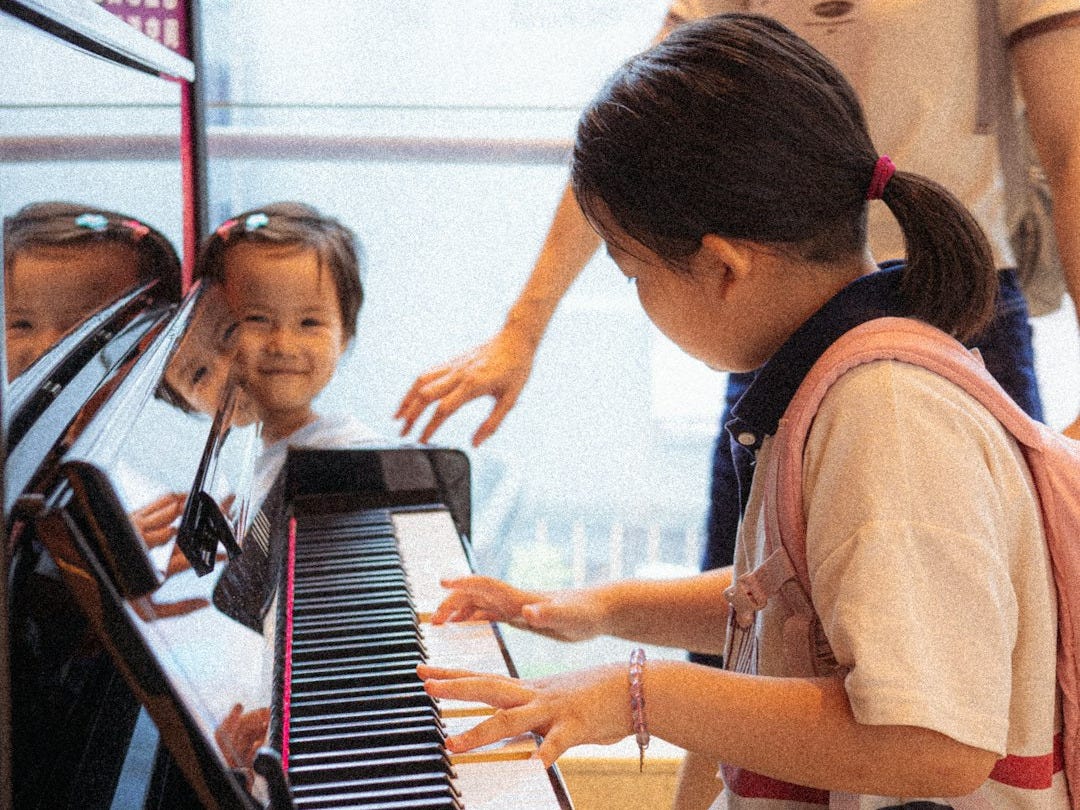
The act of putting pen to paper—or fingers to a piano—is a radical act. Every strike of the pen, every note on the keyboard, sends ripples into the world and affects people in profound and hidden ways.
Happy New Year! And welcome to Writer In The World, the Wednesday section of Aimee Liu’s MFA Lore. This curated collection of essays on the writing life is written by acclaimed MFA faculty and alumni.MFA Core essays on the craft and business of creative writing will drop each Saturday. And Metaphortography Writing Prompts post every Monday. Subscribe to MFA Lore and receive some, or all, of these newsletters every week.
Last chance! Upgrade now to receive an MFA-level response to your work at the 2025 rate!
Today— December 31— is the last day to become a Premium Member of the MFA Lore community before the price rises. Premium members receive:
Aimee’s written feedback on both your query and up to 5 pages (1250 words) of creative work, plus an optional follow-up phone call. Your “Take 5 Packet Letter” will highlight both the Strengths and the Opportunities in your work, helping you determine whether it’s time to “press send” to agents or to reorient your revision.
Monthly zoom “seminars” just for Premium Loreates.
And all other benefits of a paid subscription.
Price will rise to $180 after Jan. 1, so subscribe at the Premium level for just $140 or upgrade today. Details HERE.
The Invisible Power of Art
By Deborah Brevoort
Most of us can point to the moment when we were awakened to art, to the incident that set us on the path to writing. Mine was in San Francisco in 1985. I was on a business trip and went to the American Conservatory Theatre to see Angel’s Fall by Lanford Wilson. The theatre was half full. The audience hated the play; they were leaving in droves. But I was mesmerized. When the teenage character delivered his monologue in Act two about playing tennis, my life was changed.
I don’t play tennis. I don’t even like tennis, but I walked around for several days in a state of bliss, compelled to meet the power of that monologue—and the play— by rendering something powerful of my own. When I got back home, I started writing. I haven’t stopped since.
Lanford Wilson doesn’t know he changed my life. All he knows is that Angel’s Fall was a failure. It was his biggest failure, in fact. The critics panned it. No one produces it. It’s out of print. But I wouldn’t be a writer today if he hadn’t written it.
The legendary singer Marian Anderson was set on her path at an early age when she was delivering laundry for her mother one day in her Philadelphia neighborhood. She heard the sounds of a piano coming from a nearby house. She peeked through the window and saw a housewife playing the piano, giving herself over to the music. In that moment, young Marian knew who she was. She began a lifelong pursuit of music that ultimately led to her historic concert at the Lincoln Memorial many years later. That concert would become one of the most iconic events in American history. It established the mall of Washington as the seat for civil protest in America. Her concert planted the seeds for the march on Washington. It became the symbol of the civil rights movement and the backdrop for Martin Luther King’s “I Have a Dream” speech.
All of this was set in motion because a Philadelphia housewife entertained herself one afternoon by playing the piano in her living room. Little did she know that a young girl was peeking through her window, and that the power of her playing would ignite a passion and launch a career that would significantly alter the course of American history.
I think many writers today suffer from the uncomfortable feeling that our work has been relegated to the sidelines, devoid of any political impact or muscle. It’s an understandable response, considering the overwhelming problems facing the world and the small place that literature and the arts seem to occupy in our society. And yet, I think we underestimate our work when we give in to these feelings. The act of putting pen to paper—or fingers to a piano—is a radical act. Every strike of the pen, every note on the keyboard, sends ripples into the world and affects people in profound and hidden ways. And just like the Philadelphia housewife who changed the world and didn’t know it, most of us will never get to know what impact our work will have either. All we can know, for certain, is that it will have one.
So, when the events of the world become too much to bear and when you don’t know what to do or how to respond, just write. It’s the most radical action you can take. Submit yourself to the gifted state of creation and wrestle your work to the page. You will change the world—even if you never find out how.
Deborah Brevoort is a playwright and librettist from Alaska who now lives in the New York area. She is an alumna of New Dramatists, one of the original company members of Alaska’s Perseverance Theatre, a member of the playwright’s collective at Florida Studio Theatre and a co-founder of Theatre Without Borders, dedicated to international theatre exchange. In 2024 she was appointed as a Fulbright Specialist for theatre, musical theatre and opera for the US State Department. More at DeborahBrevoort.com


Thank you, Aimee, for this poignant-wonderful piece by Deborah Brevoort. What a way to show us how valuable singular moments in our lives can be. And the final message 'just write' which is perfect. Happy 2026...