


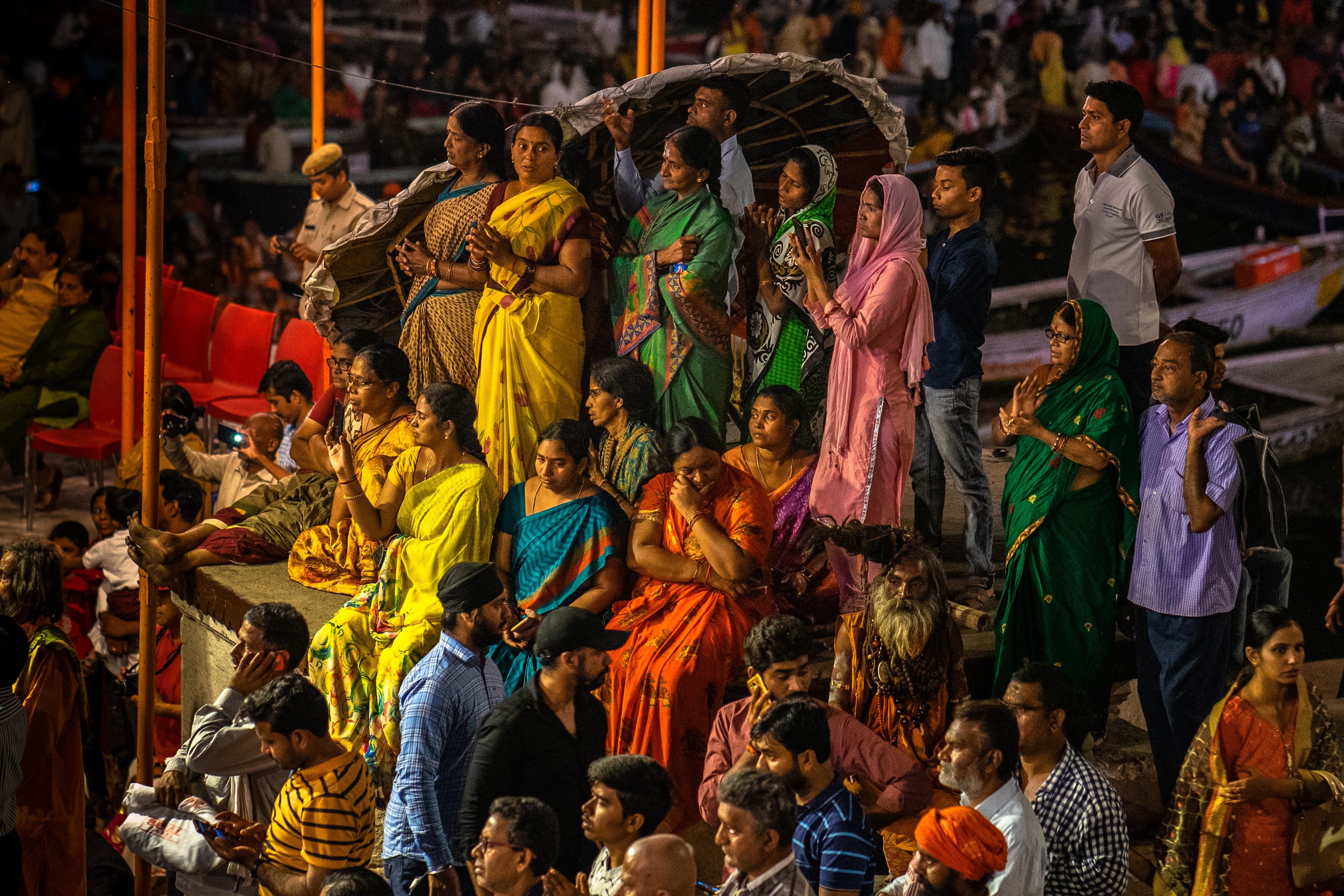
Back in high school I had a world studies teacher, a former nun named Joan Harden, who assigned a writing lesson that I’ve since come to treasure. She told us to describe America as if we were Martians arriving here for the very first time. That could mean, for example, writing about a coffee maker as if we had no idea what coffee was. We could use simple English, but no shortcut nouns — no Xerox or computer or telephone. We had to look at the world around us with completely fresh eyes, working backwards to reveal the function of actions and instruments, to make sense of how Americans interacted. Even a kiss had to be deconstructed in detail to reflect its cultural purpose. The goal was not to write science fiction but to discover just how much we take for granted — and overlook — because of familiarity.
The value of this exercise for writers cannot be overstated. Whenever a reader picks up your story, they’re effectively stepping into the world of your fiction for the first time. Like tourists, they need help to get oriented. And that means you, the writer, need to imagine the world through their unfamiliar eyes and find ways to present it so that it makes sense to them.
The challenge of reality world building
Because science fiction settings are inherently foreign, speculative writers typically pay close attention to this process of world building. They make sure that the rules and frameworks of their alien realms ring true and clear. But the challenge, in some ways, is even greater for writers of realistic fiction.
When we write about familiar places and situations, it’s natural to fall back on shortcuts. We don’t stop to question how long it takes to get from Point A to Point B, or how much a sno-cone costs, or what a sno-cone even is. More to the point, if our characters are native to this world, they’ll take all these details for granted, too. It would be weird if they stopped to explain aspects of their life that, to them, require no explanation. But readers may still need help.
Omniscient narrators can deliver explanation, up to a point. But omniscient narrators are characters, too, and if they’re simply explainers, they’ll become stultifying. Cultural translation can’t be their sole purpose. Also, omniscience introduces stylistic effects that don’t suit every story.
Good writers can employ context to do much of the heavy lifting. Show a little girl licking the cherry red stains off her arm as the shaved ice melts through its paper cone, and the reader will quickly grasp what a sno-cone is. But context is most effective as a tool when the reader can picture the larger world and just needs help with the particulars of a region or subculture. All Americans can imagine the White House, for instance, but in a novel about the First Family, most of us would get lost in the East and West Wings without a little guidance.
Many writers split the difference by not writing too far outside their target readers’ comfort zones. That’s one reason why most of the books published in the U.S. are about America. American readers automatically get the inside baseball and cultural references that stymie foreigners. When these books are translated for foreign markets, a lot of the contextual nuance can get lost, but that’s a secondary concern for American authors and publishers. The American market is primary.
What, then, about books that take us deep into hidden subcultures or other countries? What if the whole point of our work is to get the reader out of their comfort zone, to experience life in a different time, place, or realm?
Cue my high school teacher’s lesson:
Enter the stranger. Bring in the foreigner. Open the eyes of a child. Employ culture shock!
Novelty is key
The magic element here is novelty. When we’re new to a situation, we notice every detail and question even the obvious. For writers, novelty is the elixir that keeps readers engaged. It piques curiosity and arouses a powerful mix of excitement and anxiety. In an unfamiliar situation, anything can happen, for better or worse, and we’d best be on our toes.
Because that’s how readers approach every story, they’ll naturally connect with point-of-view characters who are equally new to the scene. And when the story is set in unfamiliar territory, those vicarious partners will allow the reader to experience the thrill of culture shock without crashing.
It’s a tactic that’s used so often you may not even notice it. Think of Dorothy in Oz, and you’ll soon find parallels in other classic tales. Nick Carraway transported to New York from Chicago in The Great Gatsby. Charles Marlow venturing into the Congo in The Heart of Darkness. Ralph Ellison’s unnamed narrator in The Invisible Man leaving his small Southern town for the hostile realms of college and New York. Alice falling down the rabbit hole into Wonderland.
All these characters literally bring fresh eyes to the fictional worlds of their stories. I’ve used this method in every one of my own four novels, too. Although I can’t say I did this intentionally, or even recognized it initially as a strategy, the “newcomer narrator” has served me well.
The foreign American
As an American myself, the main reason I create American protagonists is to help me enter my fictional settings, which are mostly located in Asia. In my latest novel, Glorious Boy, my protagonist Claire is a Connecticut Yankee in British India, a modern wife among colonial matrons, and an aspiring anthropologist aiming to study ancient forest tribes. When she and her new British husband travel from New York to the remote Andaman Islands in 1936, young Claire especially is in for profound culture shock. Everything about her new home strikes her as novel, exciting but also terrifying, and that awakens her senses to each vibrant detail.
Here are Claire’s first impressions of Ross Island, the colonial port’s cantonment where she’ll soon live:
The hillock stretched like a long green breaker at the entrance to a harbor that abruptly bristled with boats. A mirage is how Claire would record this first impression. A miniature replica of a world she thought she’d left behind. A dark gothic church with a soaring steeple.The semblance of a town square and parade ground. Victorian houses along the ridge, with gabled roofs and wide verandas, pale gingerbread trim. The colonial residents themselves were scarce, but small brown figures in white uniforms appeared and disappeared among the towering shade trees. Their numbers multiplied toward the southern end of the island,where the western architecture yielded to a dark brick scramble of shop houses and the humanity of a bazaar. The Hindu temple on the waterfront resembled a multicolored stack of Life Savers.
The advantage of tapping into the newcomer’s perspective is that readers can acclimatize to the foreign culture along with the protagonist.
It’s like learning on the job. You’re not expected to know it all at once. You’re allowed to be as confused as the character, to ask questions, make mistakes, and figure things out as you read. This way, readers feel like their keeping pace instead of getting overwhelmed and falling behind.
Fiction friction
Another benefit of American foreigners in fiction is that they bring their familiar biases, beliefs, and touchstones along to their new locales. This can make for compelling “fiction friction.”
I used Claire’s democratic ideals, feminist goals, and global inexperience to place her at odds with the rigid and often brutal norms of British imperialism. I let her American attitudes get her into trouble in this strange new world. I let her difference be a source of conflict in her marriage, her work, her motherhood, and ultimately in her quest to reunite her family during World War II. If Claire hadn’t fallen under the sway of her own American heroine, Margaret Mead, she never would have acquired the expertise or the gumption to convince the British War Office that she belonged in a Special Operations undercover mission. And in part because she was a crazy American, they didn’t know how to stop her.
The point is that both familiarity and foreignness are valuable tools in fiction. Whether your characters are tourists, ex-pats, immigrants, or aliens, they’re never just observers of a distant world. They’re also the Other. They will be questioned, judged, and tested by their adopted culture. Their expectations will collide with their new reality. They will learn, sometimes through disaster, to understand what’s true about this world and themselves, and what’s pure illusion. (Again, think of Dorothy unmasking the wizard in Oz.)
When it’s most successful, the newcomer’s perspective yields discoveries that affect every layer of the story. Yes, it helps orient the reader, but it also juices the plot. It shapes characters’ interactions and complicates their relationships. It informs their choices and, ultimately, illuminates the story’s deepest meaning. No matter how transient your foreigners may be, if they’re providing the point of view that guides your reader, they can’t just be passing through.

Would you like an MFA-level response to your work?
Becoming a Premium Member of the MFA Lore community will entitle you to Aimee’s expert feedback on your query and up to 5 pages (1250 words) of your creative work. Her “Take 5 Packet Letter” will highlight both the Strengths and the Opportunities in your work, helping you determine whether it’s time to “press send” to agents or reorient your revision. A follow-up phone call is also included, PLUS monthly zoom seminars with Aimee and other Take 5 Loreates. Subscribe or upgrade to Premium and claim your Take-5 Packet today!
P.S. If you’re feeling overwhelmed by emails, please remember that you can control which MFA Lore sections you receive in your inbox. Learn how to manage your subscriptions HERE.
What great guidance, Aimee! In my memoir (on sale date: June 8, 2024!) about my first three years living at a Zen temple and martial arts dojo in Hawaii, I did a lot of this kind of description--of the landscape, architecture, clothing, customs, and arts. It makes sense now why the beta readers described it as stepping into a foreign world, and said it was more accessible. I think I did this intuitively because this kind of interpretation is something I frequently have to do with new Zen students.
One thing I also did, though, was to not translate or define several Japanese and Hawaii terms in the prologue. I just wanted to paint a picture in the first pages. In the introduction (which, boy, I hope folks will read), I explain that this is in an attempt to help readers experience the Dojo as I did--as a foreigner who was told to just pay attention rather than ask for translation and explanation all the time. Very East Asian, yeah? I do explain that I will eventually translate terms and that there's a glossary in the back, though. I think this is something Chenxing Han does in her new memoir, too, leaving some Chinese characters untranslated, too, to invite the reader to enter her multicultural world.
There's so much possibility in opening up these new worlds for readers! Before writing this book, I would never have understood the level of thoughtfulness and craft it requires, much to your point.
Mahalo for this great post!
An especially terrific piece. How easy it is for us to slip often into our own comfort zone for the sake of authenticity. No question that breaking the mold, repeatedly, is like adding cinnamon to pie. Plays well every time. Thanks.