


Shortchanging this process is like sending a child directly from preschool to high school; you’re asking for failure.
Hello Loreates,
I hope you caught my Well Published interview with author & essayist Karen Shepard this week. It was such a rich one, ranging from the benefits of writers’ conferences, to the experience of getting published by The Paris Review, to the unique intricacies of epistolary writing, to writing about difficult mothers, and most of all, to the pros and cons for writers of having a “different” background like a mixed-race family. ICYMI, catch up HERE.
In the rest of my writing life, I’m in the struggling phase of revision on an essay that I’m trying to deepen, to reveal more of myself and what this slice of family history honestly means to me. (Yes, thank you, I am working on this post to avoid facing said essay!) But I went back into my archives and found an MFA letter I wrote to a student who was at this juncture with her thesis memoir. It held a lot of useful reminders that I thought might benefit you, too.
This post is an abridged version of that letter. If you’re staring down a completed first draft that you don’t know how to edit, maybe it will help.
Write on!
Aimee
Take 5 Writing Workshop
This monthly workshop for Premium MFA Lore Subscribers allows us to take a close look at a different 5-page submission each month, tailoring feedback to the needs of each writer. To join, become a Premium Subscriber today:
Well Published, Live! with novelist Julie Buntin on her new book ‘Famous Men
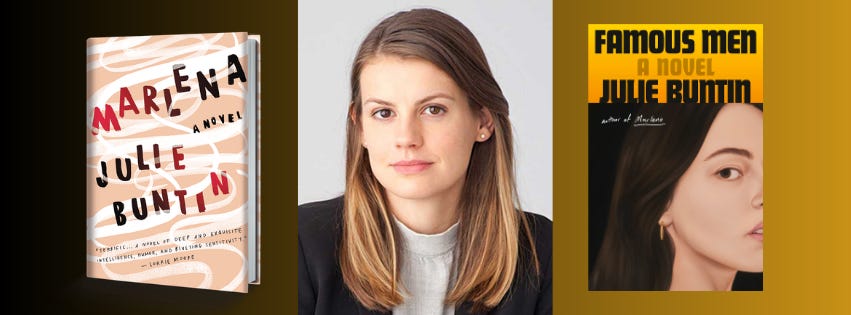
I’m delighted to invite you to watch Well Published, Live! with novelist Julie Buntin, whose new novel, Famous Men, is coming from Random House in July. Her debut, Marlena, was a finalist for the National Book Critics Circle’s John Leonard Prize and longlisted for the Center for Fiction’s First Novel Prize.

True developmental editing is the equivalent of drilling through the chess board and adjusting the underlying gravity field so your reader can feel and smell and hear the invisible forces that are actually pushing and pulling the story’s pieces.
Edit Toward the Deeper Meaning
Congratulations! You’ve completed your first draft. A well-deserved sense of accomplishment comes with this milestone, whether the work is flash prose or an epic novel or memoir that you’ve agonized over for years. Savor the moment. Take a break. But do not— repeat, do not EVER—succumb to the temptation to send that first draft out into the world.
That temptation is powerful. Every seasoned writer has felt it, and most of us have succumbed more often than we’d like to admit. It’s always a mistake.
I don’t care what a genius you are, or how essentially topical your story is right now, how many books you’ve published to acclaim, or how big a wave you’re racing to ride. Your first draft needs developmental editing before it’s ready for anyone else’s eyes. And this kind of editing takes time, patience, focus, and distance. Shortchanging this process is like sending a child directly from preschool to high school; you’re asking for failure.
Please note: I am not talking here about copy editing for grammatical errors and typos. That work is vital, too, but it’s not the kind of surgical editing that will transform your work from a shitty first draft (because, yes, even the best of them are shitty) to a finished piece of writing.
What is the ultimate goal of developmental editing?
Take this to heart: The purpose of developmental editing is to make your words matter.
By “mattering” I mean, your words leave an impression on readers that affects and changes them in some palpable and positive way:
