MFA Lore

MFA Lore

MFA Core

Don't Let Fear of Family (FOF) Block Your Writing Path

To save your sanity, compose as if everyone you know were dead

Aimee Liu's avatar
Aimee Liu
Oct 11, 2025
∙ Paid
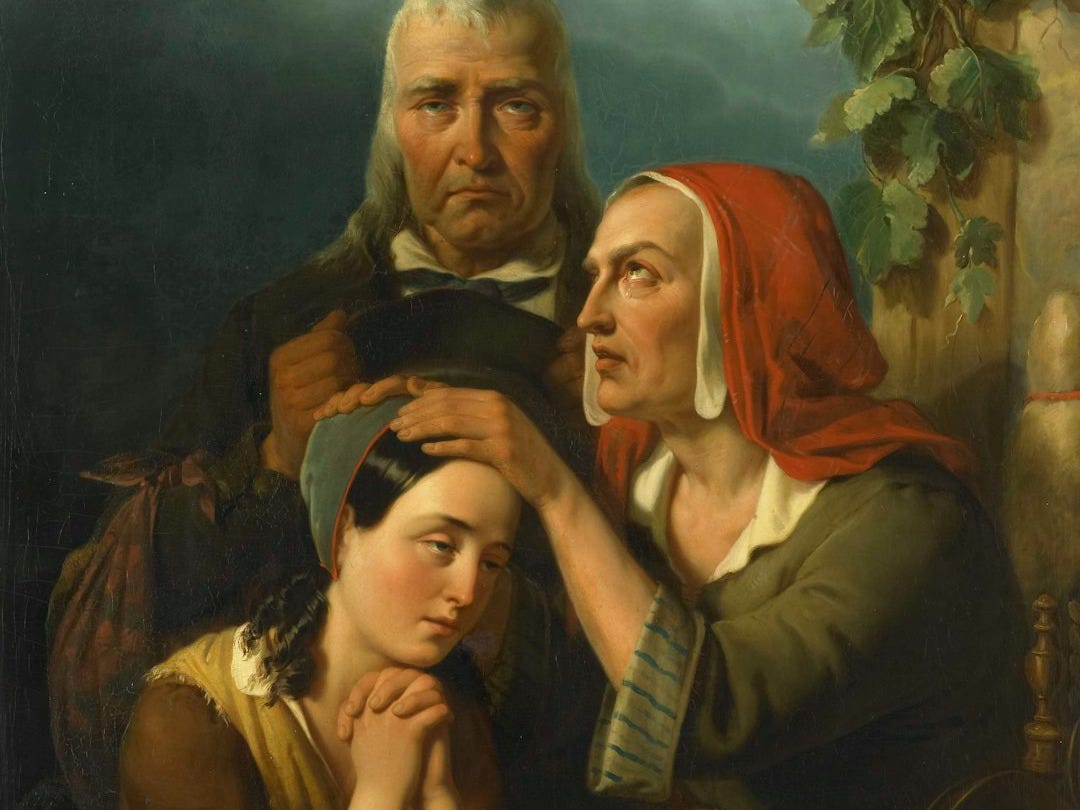
man in black long sleeve shirt hugging woman in brown hijab
Photo by Europeana on Unsplash

The impasse created a cautionary distance that allowed us both to carry on as if we didn’t need each other. That distance saddened me, but I never regretted writing those books. I wrote them for my sanity.

Dear Loreates,

I’ll admit it. I’m finding it almost impossible to crank up momentum for the essay about my mother that I’m supposed to be writing. I can blame the political apocalypse bearing down on all of us, but I think the bigger obstacle may be the emotional hangover of my mother’s lifelong attempt to censor my writing. She died at 101 three years ago, but her ghost still hovers over my keyboard in a defensive crouch.

Years of conversation with other writers have convinced me that fear of family (FOF) is one of the most common causes of self-censorship. As Bridget Crocker said when we discussed her memoir, The River’s Daughter:

You continue to slog forward despite the constant gnawing dread that your family is going to hate what you’re writing and disown you. The author and teacher, Susan Shapiro says, “When you write a piece that your family hates, you’ve finally found your voice.”

Even when we’ve found our voice, though, many of us still shy away from contentious subjects or people. We may delay telling stories that urgently need to be told. We’ll shade subjective truths to avoid rocking the familial boat. And some wait for prickly individuals to die, expecting the long withheld stories to rush forth in a torrent as soon as the objecting parties are out of the way. Only to discover that we’ve internalized the prohibitions and no longer trust ourselves to tell the truth.

With all this in mind, I decided to unpack this topic here. Whether or not I can pull myself over the FOF hurdle, maybe I can offer you a helping hand.

SAVE THE DATES:

Tune in to MFA Lore’s Well Published! Substack Live series with hot new authors and industry professionals about the truths and tricks of getting… well published!

  • NARRATIVE NONFICTION- Live with Pulitzer Prize-winner Ed Humes, Monday, Oct. 27, 12 noon PT.

  • AGENTS TODAY- Live with veteran literary agent Kimberley Cameron, Wednesday, Nov. 12, 11am PT.

For FOF shame!

“Why on earth,” my mother demanded in one of her more memorable diatribes against my memoir Gaining: The Truth About Life After Eating Disorders, “would a middle aged woman, long past a past like that, want to drag it up, mirror it line for line, embarrass the hell out of everyone?”

Why, indeed. She might well have asked every memoirist, living and dead, the same question.

Mom wrote this in an email that abounded with other choice words after I sent her galleys of my memoir. I’d learned four books earlier to show her my work only after it had been edited and approved by objective professionals, when it was too late for her to try to stop publication. But, oh, did she protest:

“Most of the “life” you present in this book was of your very own making; secretive and furtive… People who have done nothing but love you and who look up to your accomplishments are suddenly confronted with an individual that betrays everything they thought they knew about you.”

Like a great many parents, my mother wanted to take pride in my work, but her pride was conditioned on my words flattering her in their light. Ugly truths that cut close to either of us elicited rage.

Unfortunately, exposing and examining ugly truths is the whole point of the exercise known as memoir. Without ugliness, without emotional distress, without secrets and problems, there’s rarely a story. Much less honesty about the human condition. And without honesty, there’s nothing for readers outside the family to trust.

I was 23 the first time I faced my mother’s wrath over a book I’d written: my first memoir, trying to make sense of my passage through teenage anorexia. You can read all about that episode here:

Tell Your Story, or Else!

Tell Your Story, or Else!

Aimee Liu
·
July 20, 2023
Read full story

I went on to publish my first novel, again over her roaring objections (because she feared readers would mistakenly assume the fictional parents were based on her and my dad). And then, Gaining. After each of these titles was released, my mom and I would go months without speaking.

The rifts eventually scarred over, but they left their mark. Nothing sensational or traumatic, just a low, constant barrier of distrust. Her resentment, my wariness. I longed for the confiding conversations that each book begged for; she longed for me to take back everything I’d implied about her and the deeply flawed daughter I’d portrayed. The impasse created a cautionary distance that allowed us both to carry on as if we didn’t need each other. That distance saddened me, but I never regretted writing those books. I wrote them for my sanity.

FOF with personality disorders

Personally, I believe that the toughest customers for writers are family members with personality disorders. These conditions cause a rigid pattern of perception that makes it impossible to empathize with other people’s perspectives. This can lead to harsh criticism and inflexible judgments. No book, no matter how sincere or true, is likely to change the mind of someone with a personality disorder. And if the book challenges their core views, they often will shun or lash out at the author.

Fiction writer Toni Ann Johnson realized her parents had narcissistic personality traits when readers of her first novel identified the syndrome in her characters. This was a welcome revelation, she said, because, “I finally understood what I’d been dealing with and why it was so challenging to navigate.” But as Toni Ann explained at our panel on “Family Secrets” last spring at AWP, there was no way to placate her parents once she started publishing:

“My father died in 2014, the year my first book came out, so, one way I dealt with it was to wait until then to publish. My mother was difficult with that first book, though it wasn’t exactly autobiographical, there were elements of her in it. She recognized them and she hated it.

“I dealt with it at first by being defensive and hurt but eventually, I stopped talking to her about it and let it roll off my back. I sent her the good reviews and the notices of award recognition which she mostly ignored. She also showed up two hours late to the book launch. We’ve been “no contact” since the books that came after.”


For an even deeper dive into the hazards of writing around family objections, read this:

Family Secrets: A Storyteller’s Bounty, or Curse?

Family Secrets: A Storyteller’s Bounty, or Curse?

Aimee Liu, Colette Sartor, and Toni Ann Johnson
·
April 5, 2025
Read full story

It doesn’t have to be that way

Most family objections, like my mother’s, are rooted in shame and fear. The more a relative’s perceived identity is tied to an upstanding social reputation, the more upset that relative will be by a book that threatens the family’s reputation. But when that reputation is based on false fronts that conceal deep fissures, mysteries, and problems, writers in the family often feel compelled to break it open in order to understand themselves.

Not everyone objects. My brother didn’t. Nor did my father. In fact, I grew closer to both of them as my books rolled out, even as my mother pulled away.

This is a common experience. Through the writing of The River’s Daughter, Bridget Crocker forged a deep and forgiving connection with her father, even though his physical abuse of her as a teenager, which she recalls in her memoir, was horrific. The key was that her father was simultaneously digging into his own history of trauma, and he wasn’t just open but welcomed her truth. Bridget’s mother, like mine, did not.

Of course, blood family constitutes a tiny fraction of the audience most of us write for. And the more candid, urgent, and revelatory your book is, the more receptive total strangers are likely to be. Those readers constitute a different kind of family, as I’ve discovered especially with my eating disorder memoirs. In this public family, nothing is valued more than the courage to tell your story honestly, no matter how “embarrassing” it may be. The only reputation that counts to your public family is your reputation for language that conveys truth, beauty, and compassionate humanity.

As writers, we have to figure out how to straddle the divide between these two audiences. Between guarding and revealing, pleasing and exposing. Between honoring your private family’s stability and connecting with your public family.

FOF navigational markers

There’s no one-size-fits-all guide that applies to every situation. But here are a few suggestions to help you negotiate the divide.

User's avatar

Continue reading this post for free, courtesy of Aimee Liu.

Or purchase a paid subscription.
© 2026 Aimee Liu · Privacy ∙ Terms ∙ Collection notice
Start your SubstackGet the app
Substack is the home for great culture