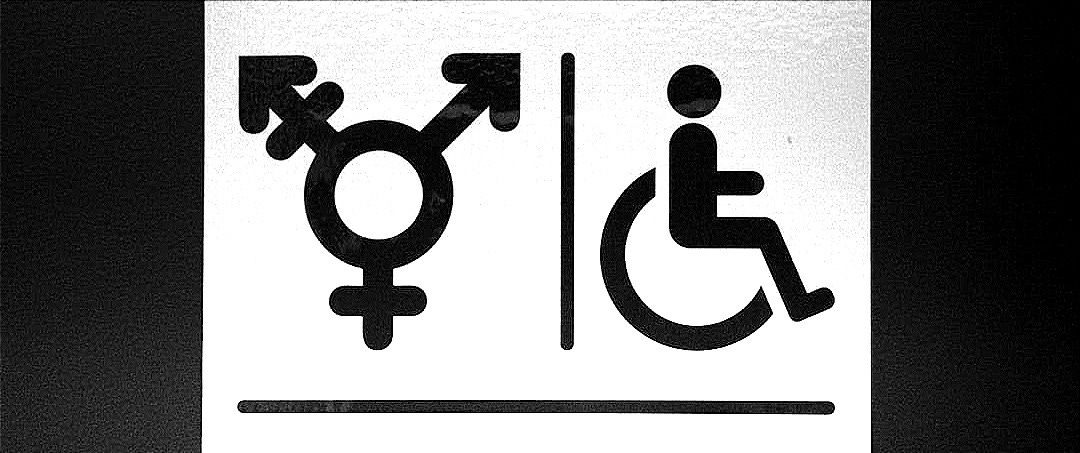
For Disability Pride Month: Contested Spaces
Kenny Fries on disabled presence in gay Berlin

As I watched some young gay people at the “Homosexualität_en” exhibit, I wondered if people like me, who are both gay and disabled, would find themselves reflected in the exhibit. And if so, how?
Welcome to Writer In The World, the Wednesday section of Aimee Liu’s MFA Lore. This curated collection of reclaimed essays on the writing life and new videos of Writers in Conversation is produced by MFA faculty and alumni.
Aimee’s MFA Core essays on the craft and business of creative writing will drop each Saturday. And her free Metaphortography Writing Prompts post every other Monday.
As an MFA Lore subscriber you can join our community and elect to receive some or all of these sections each week.
Celebrate MFA Lore’s 3rd Anniversary by subscribing now for 30% off!
Contested Spaces*
by Kenny Fries
Note: This essay was first published in 2016 and led to the exhibit, “Queering the Crip, Cripping the Queer” at the Schwules Museum in 2022-23.
In 2015, I was very excited about the “Homosexualität_en” exhibit at the Deutsches Historisches Museum and the Schwules Museum in Berlin. I was amazed at the exhibition advertisements I saw all over the city: the image of the multigendered almost naked artist and bodybuilder Cassils. This is an exhibit that could never happen in the United States, where any intersection between sexuality— especially homosexuality—and even a trace of government funding would cause a backlash from right wing politicians and the religious right.
This backlash indeed has happened numerous times, including 1989 when exhibits of artists such as Andres Serrano and Robert Mapplethorpe were attacked for promulgating “anti-Christian bigotry” (Serrano) and homosexuality (Mapplethorpe), and again in 1990 when National Endowment for the Arts (NEA) funding for “The NEA Four,” four performance artists whose work dealt with sexuality and other taboo subjects, was vetoed by the NEA Chairman, despite the artists having been recommended for grants through the peer review process. This latter controversy led to the abolishing of most federal grant programs for individual artists.
Personally, I was also excited about the “Homosexualität_en” exhibit because disability studies colleagues had arranged for me to be part of an event that would achieve one of my long terms goals: to bring disability into the gay space of the Schwules Museum, and thus into the exhibit itself. (It is not often that I find disability in gay spaces, though I’ve found more of a disabled presence in gay Berlin than anywhere else I’ve been.)
Such was my state of mind as I moved through the “Homosexualität_en” exhibit at both venues. As I made my way through the exhibit, two quotes from the exhibition wall text stood out: “Personal experiences of discrimination do not keep people from discriminating against each other” and “Museums are contested spaces, where visibility and interpretative authority are at stake.”
I thought about a recent discussion about art and access I had with a colleague involved in disability arts. She had mentioned that when people think of bringing disability into a museum they think of physical access. As I was unable to fit my wheelchair into some spaces at the DHM, and was unable to read text placed so high on the wall, I once again was reminded of how important physical access is in public spaces.
But, as a writer, I’m more concerned with the access of content. There is a lack of disability content in what we see in museums, read in books, watch in films and on theater stages. (Just last year the Schwules Museum had no images or discussion of disability in their “Porn that Way” exhibit.) Historically, the disability content there has been, if present at all, has been from the nondisabled perspective. As I watched some young gay people at the “Homosexualität_en” exhibit, I wondered if people like me, who are both gay and disabled, would find themselves reflected in the exhibit. And if so, how?
In the exhibit there was one obvious image of disability. When the Bremen Crippled Women’s Group is mentioned, there is the image of Swantje Köbsell, coincidentally one of my colleagues who arranged for my event, dressed in 1920s costume sitting on the lap of another woman who uses a wheelchair. (Full disclosure: neither Prof. Dr. Köbsell nor the other woman in the photo identify as lesbian). The only representation of a disabled man I encountered was at the Schwules: in Julian Rosefeldt’s short film “Deep Gold,” in which a naked blind man passes the main character on a surreal, seemingly war-ravaged street, a passing symbol of the sense of displacement felt by the main character, a typical metaphorical use of disability, which is how disability, when present at all, has been represented in art.
There were places in the exhibit where I felt the absence of disability content a most glaring omission, notably in the section on intersectionality, where, in the display of books related to this topic, one finds books on ‘Black Queer Studies” but no books, in German or in any other language, that have been written on the subject of being gay and disabled.
As I continued through the exhibit I made connections at places where I thought a disability studies perspective would be illuminating: I was reminded of how the word “homosexual” was used for the first time around the same time as the word “normal,” and how historically the issue of “cure” has pertained to both homosexuality and disability. I noted how there have been laws “outlawing” both homosexuality and disability, including the “ugly” laws in the United States, which made it illegal for disabled people to appear in public. Most of these laws were not repealed until the 1970s. Chicago’s 1911 ordinance that stated, “It is hereby prohibited for any person who is diseased, maimed, mutilated, or deformed in any way so as to be an unsightly or disgusting object to expose himself to public view,” was the last to be repealed, in 1974.
I made a connection between how homosexuality had been “measured” and categorized in Nazi Germany as “extreme lewdness” or “simple lewdness,” echoing the “measure” of the severity of disability that still is used today in most places to gain governmental benefits. And I was struck by how both homosexuality and disability became part of the same Nazi law, “The Prevention of Genetically Diseased Offspring”: sterilization was performed on both homosexuals and the disabled under this law.
I thought of how Foucault has become academically central to both queer and disability studies. How both being gay and being disabled are looked at as “missing something.” I wasn’t surprised how the historical medicalization of homosexuality is similar to the medicalization of disability, perhaps still the predominant cause of the oppression of disabled people today.
Clearly, a disability studies perspective would have added to the content, richness, and centrality of the “Homosexualität_en” exhibit, not only for gay disabled visitors to the exhibit who could not find a true representation of themselves, even in the multitude of videos on coming out or political activists. (Surely the curators could have included interviews with some who were gay and disabled?) but also to more fully understand the place gay history has in the larger nexus of the history of the marginalized.
As excited as I was that the “Homosexualität_en” exhibit took place at both the Deutsches Historisches Museum and the Schwules Museum, linking the well established Unter der Linden institution with the more community-based Schwules in Schöneberg, I was reminded once again of Adrienne Rich’s speaker in her poem, “Diving into Wreck,” who carries a “book of myths in which our names do not appear.”
For all of its promise, importance, and success, the lack of disability content in “Homosexualität_en,” despite the successful standing room only Disability/Queer Arts event of which I was part, was a missed opportunity. Years later, in 2022-2023, I would fill the gap with “Queering the Crip, Cripping the Queer” at the Schwules Museum. More about that HERE.
As Audre Lorde has said, “Revolution is not a one time event.”
Archived information HERE.
Kenny Fries’ latest book is Returns: New and Selected Poems. He is the author of In the Province of the Gods, which received the Creative Capital literature award; The History of My Shoes and the Evolution of Darwin’s Theory, winner of the Outstanding Book Award from the Gustavus Myers Center for the Study of Bigotry and Human Rights; and Body, Remember: A Memoir. He edited Staring Back: The Disability Experience from the Inside Out and was commissioned by Houston Grand Opera to write the libretto for The Memory Stone. His books of poems also include In the Gardens of Japan, Desert Walking, Anesthesia.