

How My Chinese Uncle Became an All-American Hero
Fighting to be an American in World War II

Herb was missing in action near Bitche, France. The 7th Army had retreated, and the enemy broke through their lines for 15 miles. For months, that was all the family knew.

A Memorial Special from East-West Legacy
Each year at this time, as Asian American Pacific Islander Heritage Month closes around Memorial Day, I think of my uncle Herb, the lone military soldier among my close relatives. I know he wasn’t the only Chinese citizen drafted into the U.S. Army in exchange for American naturalization during World War II, but I don’t know how many other newly minted Chinese-Americans ended up as prisoners of war in Germany. Personally, I find his story to be an extraordinary example of the multiracial strength on which this country was built.
This nation is NOT the product of white supremacy. It’s the creation of countless individuals like my uncle, from all races and ethnic backgrounds, who risked everything to defend democracy, freedom, and the other moral ideals that America stood for—right up until the current regime seized office. So I hope you will read this story and join me in honoring the legacy of multiracial sacrifice that is this country’s true foundation.
I honor this legacy by pledging to continue the fight for truth, freedom, and justice for all. It’s our turn now to risk more than we ever thought possible to defend American democracy. We owe that to those who came before us. We owe it to ourselves. And, most of all, we owe it to the generations who will follow us.
Thank you for all you do to preserve democracy now.
We must fight on,
Aimee
“Choice”
My uncle Herb was an American war hero. Except, he was Chinese. The explanation for this seeming contradiction will sound familiar to many immigrants, but it came as a shock to me. Born and raised an American, I took my family’s right to U.S. citizenship for granted until I grew up and learned just how varied and fraught that “right” actually can be. For Herb, it was life-threatening.
Now, I realize that my uncle’s story is far from unique. But that’s all the more reason, it deserves to be told and shared, especially among Americans who believe that patriotism and heroism are in any way dependent on race.
I only learned my uncle’s full World War II story after my father died in 2007, when I inherited Dad’s trove of wartime correspondence. This included letters from family all over the world to my parents, then living in Washington, D.C.
Dad’s little brother Herb, like my father, was born and raised in China and moved to California in his teens. But unlike Dad, who was too old at 30 to be much use to any military force, Herb was just 20 when America joined World War II. That made him a prime target for combat duty. Though still a Chinese citizen, in 1943 my uncle was given the “choice” between securing an American passport by fighting for Uncle Sam, or being deported to China to fight for Chiang Kai-shek.
That choice was more complicated for Herb than it might appear. His father, my grandfather, Papa Liu, was descended from a long line of Chinese officials and devoted his entire adult life to transforming China from a dying empire into a modern republic. Papa remained in China to continue working for the Nationalist government. But Herb’s American mother, Mama to the family, had taken her children and left after 20 years in her husband’s war-ravaged country, swearing never to return. Now settled in Los Angeles, she was constantly pressuring my father to quit his job with the Chinese press corps and apply for American citizenship. I can just hear her laying down the law for her youngest son, telling Herb he’d go fight for China “over my dead body.”
Though still a Chinese citizen, in 1943 my uncle was given the “choice” of securing an American passport by fighting for Uncle Sam, or of being deported to China to fight for Chiang Kai-shek.
Herb claimed his U.S. passport and packed his bags for Camp Phillips in July of 1944. Two months later, he wrote from France as if on a ghoulish holiday:
Passed by Army Examiner
Sept. 17, 1944
Hello brother,
Had a nice trip across and wasn’t sick at all. The country here is wonderful, all trees and orchards and hedgerows of blackberries! They’ve got apple orchards all over and the people are very picturesque. They are quite poor, as the Germans took most everything out, including young men, young women, and the wine. Some of the villages have been quite demolished and the people are still coming back in from the country. Today is Sunday and everybody is going to church. The bells have been ringing all morning.
Ten days later, Herb’s plucky pretense of cheer was shredding.
Just got your very welcome letter. I haven’t told Mama that I’m up on the front yet as she’d only worry. We’ve had our taste of enemy artillery fire already and it aint good. Our artillery has them pinned down most of the time, thank God.
Most of the villages are all knocked to hell. By the way, we landed at Cherbourg and traveled here by those 40&8 boxcars you hear so much about. Was it uncomfortable! There was frost on the ground this morning. If you want to send me something, a good heavy pair of socks with high tops would come in handy.
I’m glad to hear you’ve got the apartment all fixed up. I’m expecting to visit you sometime and I sure hope it’s soon. This life I’m leading now is kinda hard on you, I teenk!
Well, we’ve got hot chow for a change so I’ll be writing you and you do the same.
By December, Herb could no longer muster enough energy to even attempt his chipper act, though details about his reality remained necessarily sparse.
We’ve been on the front for over 50 days and just came back for a rest. I had my first shower and clean clothes in that time. Also saw a couple shows the last two nights. Almost feel like a human being again.
Am with 7th Army in case you’re interested, in the Alsace sector. Our division was credited, I believe, with taking Salzburg.
Have been receiving packages, are they welcome. If you send anything else, just send things to eat, delicacies and stuff. One of these days soon I hope we’ll be able to get together and really shoot the breeze. I’ve had a lot of experiences that can’t be told in a V-mail.
Ten days later Herb wrote with scrambled Christmas greetings.
Received your last letter with… a slew of packages, most welcome at this time. Received the combat infantry badge with a ten dollar raise in pay. The whole company got it. Also expect to get the Purple Heart for a scratch received. Am OK however. Told Mama not to worry if she got notification. I was lucky, but a lot of worry has been caused by contradicting statements of injuries at different times. Naturally I hope and pray that nothing like that will happen. I guess this sounds kinda mixed up, but I hope you got the idea.
To less serious sounding business, I just hope we’re in a position to have a good hot Christmas dinner and pray that I’ll have the next one with you or the folks.
Can’t seem to think of much to say. Maybe because of the uproar around here.
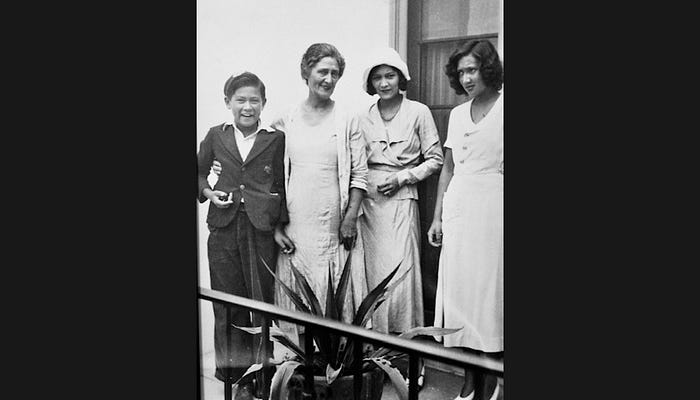
A family’s anguish
After that, Herb’s messages cease, replaced by rambling letters from my father’s sister Lotus, who lived with Mama in Los Angeles.
We are all very alarmed now that tonight’s news says the Germans are starting an offensive against the 75th army front. In fact I am watching newspapers for mention of the 44th div. as they were mentioned in action some weeks ago after going through the town of Luneville but they are somewhere near the Saar region in Germany now.
Poor little chap he sounds very cheerful in his letter but very tired as they have to march everywhere on foot. Thank God he wasn’t in the 1st Army, which has nearly been annihilated. He says he was staying the night in a perfumer’s house as the place was overflowing with expensive bottles of French perfume.
Then, less than a month later:
We are still stunned by the War Dept. telegram as you must also be, and cannot realize that our little Herby may never come back again.
Herb was missing in action near Bitche, France. The 7th Army had retreated, and the enemy broke through their lines for 15 miles. For months, as the next desperately empty letters attest, that was all the family knew.
Unlike anything my father had ever told me, these letters personalized the war. Soldiers gone missing. Boys in the trenches. Innocents frozen by war. And, for their families, day after day of waiting, silence, frantic speculation.
Herb’s suffering was hardly unique. I know this, and yet the immediacy of these exchanges pulls me like a vortex every time I read them. As far as I know, Herb was unique in our family, at least in the 20th century. Throughout World Wars I and II, Korea, Vietnam, Iraq, and Afghanistan, no other Liu fought in battle. Papa certainly endured wartime privations in China, but never as an armed combatant. All the rest, including everyone in my own generation, lucked out of military service.
When the news came that Herb was MIA in Europe, then, how did my father react? Dad was still a Chinese citizen, working for the China News Service, and, as eldest son, he bore his family’s greatest duty of loyalty to his father and his fatherland. By the rules of Chinese heritage, it was also the eldest son’s filial duty to guide his siblings. But here was Dad’s baby brother up to his chin in the mud and ice of European battlefields, while he himself sat out the war from the safety of America.
When that dreaded telegram arrived, what could Dad possibly have said that would comfort his stricken mother, let alone assuage his own baffled guilt?
In March of 1945, contacts of my family managed to reach Herb’s commanding officer, who confirmed that:
Sgt. Liu was one of a platoon that was cut off from a company unit when surrounded by enemy infantry and three enemy tanks. Attempts to relieve these men proved futile. Some of the men were seen being led away toward enemy territory with their hands over their heads, and it is believed that they had been forced to surrender. I trust that this information may prove of some help in relieving the anxiety of mind you are undergoing.
Relief? I can’t imagine that was what the officer’s news engendered. But then, finally, a postcard arrived via the Red Cross:
Am a prisoner of war and am all right. Hope you get this soon so you won’t worry. Send all the cigarettes you can and write often. Hope you are all well. Thanks for the other packages. They were swell. Goodbye for now. Love, Herb
I’d heard some talk about Herb’s wartime imprisonment, of course. What stood out in my mother’s memory was that he lost 40 pounds in less than six months. But Dad was always more circumspect. He’d state that Herb was captured toward the end of the war and suffered as a POW. Never much more than that.
My sense is that my father was deeply conflicted about the whole situation. He revered FDR, who was still America’s commander in chief when Herb “enlisted,” but Dad’s deeper cultural orientation continued to pull him back to the war’s other front. What was his Chinese brother even doing in Europe?
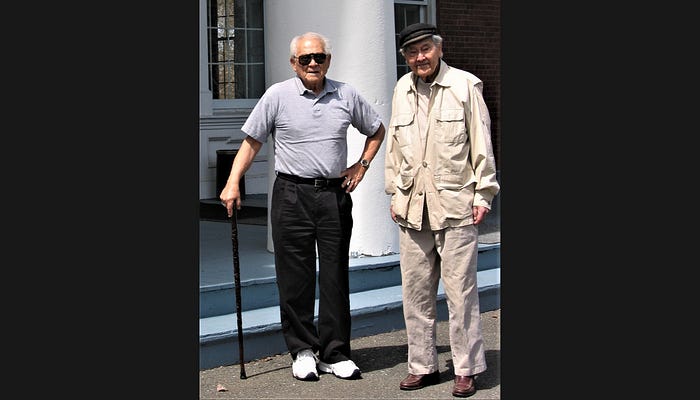
Herb’s own story
For years my uncle had withheld his own story of his capture. But in his later years he told it, finally, for the sake of his kids. I found this account, too, among Dad’s trove of letters.
Herb wrote that his battalion was sent to the front shortly after landing in Cherbourg in September 1944. They joined the southern end of the Battle of the Bulge.
We went into battle after a big barrage by the U.S.… through these German lines there. God, what a mess. They had a lot of horses as well as men, all blown to bits… you learn to move and duck.
On January 5, his company attacked a large farm about 800 yards inside the German border. “They were sitting there waiting for us.”
Herb’s company had to cross a barren field. “We got stuck in the middle. So many of our people were killed, there was no place to duck.”
Pinned down by machine gun fire, Herb lay flat on the ground and watched “this big piece of something coming at me… If I lift my head I’m going to get shot.” Metal shrapnel broke his left ankle, but he survived well enough to hobble forward with the other survivors.
The men tried to shield themselves behind a tank in order to descend a long snowy hill into the farm complex, but after the tank stalled in a ditch, they retreated into a nearby barn to wait in the freezing cold for reinforcements. The Germans soon had them surrounded. Their reinforcements never arrived.
It was either surrender or get killed.
As they were marched away Herb registered dead bodies in all directions. “This was a working farm. There were a lot of hogs around… chewing on the corpses.”
“Received the combat infantry badge with a ten dollar raise in pay. The whole company got it. Also expect to get the Purple Heart for a scratch received.”
All told, 42 men and two officers were captured. After interrogation, the captives were stuffed into boxcars, each built for 40 men but filled with more than 80. It was so tight, they had to take turns sitting.
I was unlucky enough to be in the last one, so we had 92 in ours. There was no water, no food, no pit stops for three days… On the way we were bombed by our own planes while in a railroad yard. We were locked in. At least one car was hit.
Herb wound up in a labor camp, Arbeit Kommando #1348, on the site of an old Nazi youth camp near the Elbe river. Each day, the prisoners were marched through the woods down the mountain to work on the railroad bed. Amenities included outside toilet pits.
Rations consisted of a cup of ersatz coffee brewed from ground acorns in the morning and 1 liter of weak potato soup with some occasional horsemeat and 350 grams of dark bread of dubious content at night.
The camp was close enough to Dresden that debris from the Allied bombardment in February floated in the air for days. The prisoners could hear Russian artillery getting closer. Then, one day in early May, the guards took the prisoners out on the road. Their orders were to stay ahead of the Russians, but the road was jammed with civilian refugees, and it soon became clear that no one was actually in charge. Herb and his buddies stripped off their uniforms:
I joined up with 24 other POWs of various nationalities. We found a 1939 Chevy panel truck abandoned at an intersection after the Russian tanks went through. We got it running and all piled on. We headed for Chemnitz where the US forces had stopped. In order to get there we had to drive through the Russian Army, who were going the other way. When we got to Chemnitz we met a US jeep with a Lieutenant and driver who took a picture of me with three other soldiers on the roof of our getaway truck.
That was May 10, 1945, two days after V-E Day. The army flew Herb by C-47 to Camp Lucky Strike in France. He had malnutrition, shrapnel in one leg, and sores all over his body. The medics gave him 18 shots of penicillin and ordered him back to New York.
As Herb’s ship passed the Statue of Liberty on June 13, 1945, the loudspeakers blasted The Andrews Sisters singing, “Don’t Fence Me In.”
Coda in China
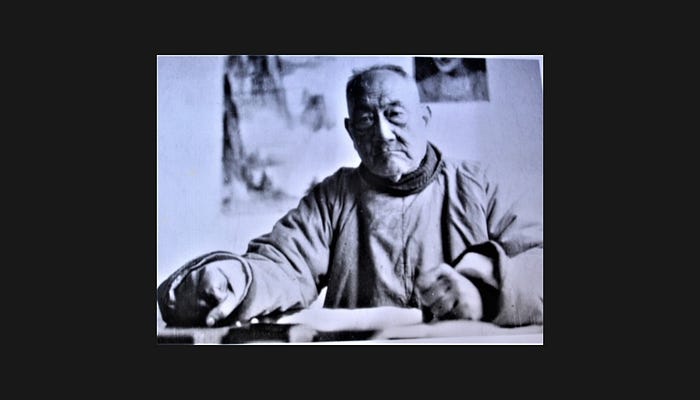
But that wasn’t the end of this particular story. The war still raged in China, and news traveled slowly. My grandfather, Papa Liu, had been separated from his wife and children now for 11 years. He would never see any of them again, and they would rarely talk about him. Yet here, as a sweet finale, was the letter Papa wrote my father after belatedly receiving the news about his “Baby” son Herb:
My son:
Your letter says that Baby and the three soldiers are good. I was so happy that I couldn’t even sleep for a night —
I suspect Papa was informed of Herb’s capture only after the ordeal was over, when word of his son’s imprisonment could be accompanied by news of his release and that snapshot of Herb and his three buddies on the roof of their 1939 Chevy amid the streaming refugees. What use would it have served to tell the father in China while the son still was missing in Europe? Had Papa even been told that Herb enlisted? That he’d gone to Europe in the first place? That he no longer identified as Chinese?
Such communication gaps perhaps are inevitable in families divided by migration and war. In those days, even the most urgent messages could be lost in transit or translation. Not to mention the ubiquitous warning: Loose lips sink ships.
But Papa’s elation and relief touch me deeply. In the wake of my father’s death I’ve discovered many letters from my Chinese grandfather. He was a serious and circumspect man who rarely leaked any hint of his emotions. This singular reference to his being “happy” betrays his deep and abiding love, no matter how remote he might seem.
Ten years younger than Dad, Herb was born when his mother was 45 and Papa 47. Before that time, Dad once told me, his father was almost always traveling. When I asked what he remembered of Papa’s time at home, my father always said, “Not much, really. He and Mama would sequester themselves in their bedroom for days.”
Whether my grandfather lived at home more regularly after Herb’s birth, or whether Mama simply refused to make any more babies, I have no idea, but I do know that Papa indulged Herb as he never had the other three children. Only little Herb — “Baby” — was invited to join the men who gathered for Papa’s mahjong parties. Herb would sit on his father’s knee and learn to wash and stack the smooth, cool ivory tiles, to wager and play defense.
Of all the children in Dad’s family, only Herb, the future all-American hero, would inherit Papa’s gambling bug. He would never see his father again, but after the war, after earning an engineering degree from Columbia on the GI bill, after marrying and returning to California to work in aerospace, he’d make annual visits to Vegas. And, as he had in Germany, he would prevail.
This essay was first published on Medium, in Human Parts, Feb 25, 2022
Coming Attractions from MFA Lore:
Tune in on your Substack app for upcoming MFA Lore LIVE chats:
Well Published! with Bridget Crocker - Wednesday, June 11 @ 12pmPT / 3pmET
Authors Unfiltered: LIVE with Darien Gee , Aimee Liu , and Katie Gee Salisbury - Friday, June 20 @ 12pmPT / 3pmET
Loreate Salons for Paid Subscribers are now bimonthly!
By popular demand of our Zoom Loreates, we’re now going to gather online every two months on the third Saturday. This day and time seem to work for everyone from Hawaii to Switzerland, so our next gathering is Saturday, July 19 at 10amPT!
All paid subscribers are welcome. As we get to know each other, these gatherings will be less meet-and-greet and more discussion of the thorny issues bedeviling our collective writing life. Consider this online space our Loreate Salon!
Would you like an MFA-level response to your work?
Becoming a Premium Member of the MFA Lore community will entitle you to Aimee’s written feedback on your query and up to 5 pages (1250 words) of your creative work. Your “Take 5 Packet Letter” will highlight both the Strengths and the Opportunities in your work, helping you determine whether it’s time to “press send” to agents or reorient your revision. Price will go up next month, so subscribe or upgrade today!
What an incredible story. And an example of the kind of stories about non-white war heroes that our current administration seems bent in erasing. It was one of the more bizarre directives that stories like your uncle’s were taken down from government sites. While I know there is an overarching mission to stamp out “DEI” wherever they imagine it appears, removing stories of the Windtalkers or the Tuskegee airmen (now restored) was just targeted hate.
Uncle Herb! What a compelling story and complicating your dad's life even more.