


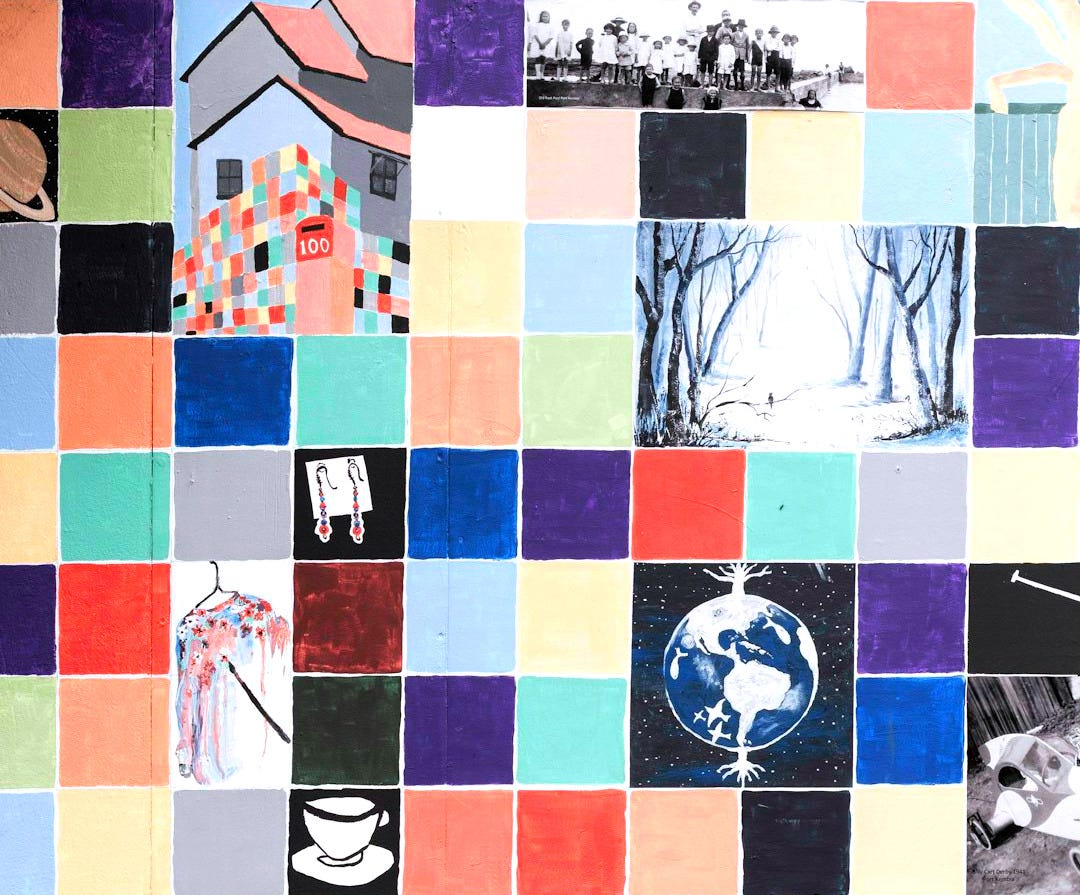
One great advantage of quilting is that it forces you to step back, off the page, to assess the work’s core components from a distance.
Hello Loreates,
I had several topics rolling around in my head for you this week, but then I realized —in my personal work— that I needed to try merging two essays, which weren’t working, into one bigger project that might have more resonance. This realization pulled me out of a creative funk and gave me today’s topic, as I’m employing a strategy that I’ve used for years but not (I don’t think) shared with you here. I call it Quilting.
Quilting is a trick I devised two or three books ago as a ghostwriter for research-driven projects. As I discovered quotes or research findings that I knew I wanted to include, I’d cut/paste or summarize each one (with its source reference carefully noted!) into a dummy document that crudely represented the intended chapter. Once the dummy hit critical mass with all the general topics I felt the chapter would need, I’d rearrange the raw pieces to form a “quilt” of organically flowing ideas. The result gave me a very rough pattern for the chapter, similar to an outline but with substance, so I could see where I had enough material, where I needed more, and where information might be redundant.
The more comfortable I became quilting research projects, the more confident I felt that the same process could work for fiction and creative nonfiction. It’s especially useful for major restructuring that combines or moves existing passages or sections of material. One great advantage of quilting is that it forces you to step back, off the page, to assess the work’s core components from a distance. It allows you to eyeball the macro pattern without getting distracted by the prose.
Since I’m in the thick of quilting my trial merge, I thought I’d take you through the process step by step.
Especially if you’re restructuring a manuscript, read on!
Aimee

How to Quilt Your Story
I don’t sew, but I know that quilts are patterns pieced together from scraps of old material. At various stages in writing, I rely on a similar process to assemble and organize pieces of my stories and books.
