

Make a Haven of Your Writing Life (and Substack Publication) with the 7 D's
You don't need a physical writing retreat to retreat into writing

Maxine Hong Kingston once told me that she began writing as a child at the family dinner table — surrounded by her parents and seven siblings. Each night when she finished eating, she’d retreat to her corner of the table to write, and when she finished, she’d emerge from her mind’s haven and read to her family what she’d composed. She didn’t need to escape her family to a writing retreat; writing was her retreat.
Hello Loreates,
Sarah Fay, PhD recently likened Substack Notes to a river flowing past us all, while Posts are more like parcels delivered to each subscriber’s door. I found those analogies useful. But what, then, is a Substack Publication? More broadly still, what is a writing life?
For me, both my publication and my writing life serve as havens, the equivalent of daily retreats set apart from the flowing river of commerce, news, and distraction. A kind of home base for the soul. They give me the opportunity to step back from the madness, demands, and anxiety of the world around me. They allow me to reflect on memories and ideas that can help make sense of the senseless, while also providing emotional respite from the assault of external stimuli. They also allow me to cultivate — and share—the tools that deepen this process of reflection. Especially here in this publication, I’ve found the same kind of community and reciprocity that I’d expect in a physical writing retreat with other kindred spirits. There’s a healthy balance here between respect for the work and respect for each other, between writing time alone and social connection.
I just started reading Virginia Evans’s The Correspondent (reminds me of The Stone Diaries, and I highly recommend both!), and this line perfectly described what I’m aiming for here:
“It is the correspondence that is her manner of living.”
But this “manner of living” is not automatic (which is more or less the point of The Correspondent!). Any quick scan of Substack Notes will reveal that, for many, the writing life is not a haven but a hassle. Ditto, their Substack publication. Just yesterday I was counseling a friend who was so exasperated with her publication that she was practically screaming. Not a haven.
I’ve been on Substack now for four years. I’ve made writing my life— and career— for more than forty. And I’m not always zen about either enterprise. There have been plenty of highs and lows. I don’t for one instant pretend that writing is easy, fun, or relaxing for me. It’s often harrowing, usually frustrating, and always challenging.
Yet I keep coming back for more. Writing, and thinking about writing, give me solace even when they wring me out. I think this is the result of attitudes and expectations that I bring to my work here each day.
In other words, it’s not that writing provides me with a haven but, rather, that I turn writing into my haven. How? The longer I pondered this question, the more I began to see a pattern of commitments, almost like terms that you’d need to meet before qualifying for a physical retreat.
Let’s call these foundational commitments the 7 D’s.
Save the Date!

Tuesday, April 28, at 10am PT
Well Published: MEGA-Bestselling Author Christina Baker Kline
I’m delighted to invite you to my next Well Published, Live! with the formidable Christina Baker Kline. We’ll be chatting about her star-studded writing career, her astonishing new historical novel The Foursome, and her vital work as Vice President of the Authors Guild.
For your writing life or publication to become a haven, you have to believe in the value of your efforts and in yourself as the author of meaningful ideas and explorations. You have to trust that the process of creativity will bear fruit— that it’s worth your while. You have to take yourself seriously as an artist.
Prepare to Retreat into Writing
What is a writing retreat? I’ve been to some and led others. And in my experience, the best retreats are not relaxing or soothing. They’re not spas (even though some are held at spas). They’re time-outs for concentration, inspiration, and motivation. And active creativity, which may or may not produce written pages.
Good writing retreats also introduce us to new ideas and fellow creators. They prompt us to question and come at our work from unexpected directions. They challenge our assumptions and perspectives. They liven up the process of writing and thinking about writing.
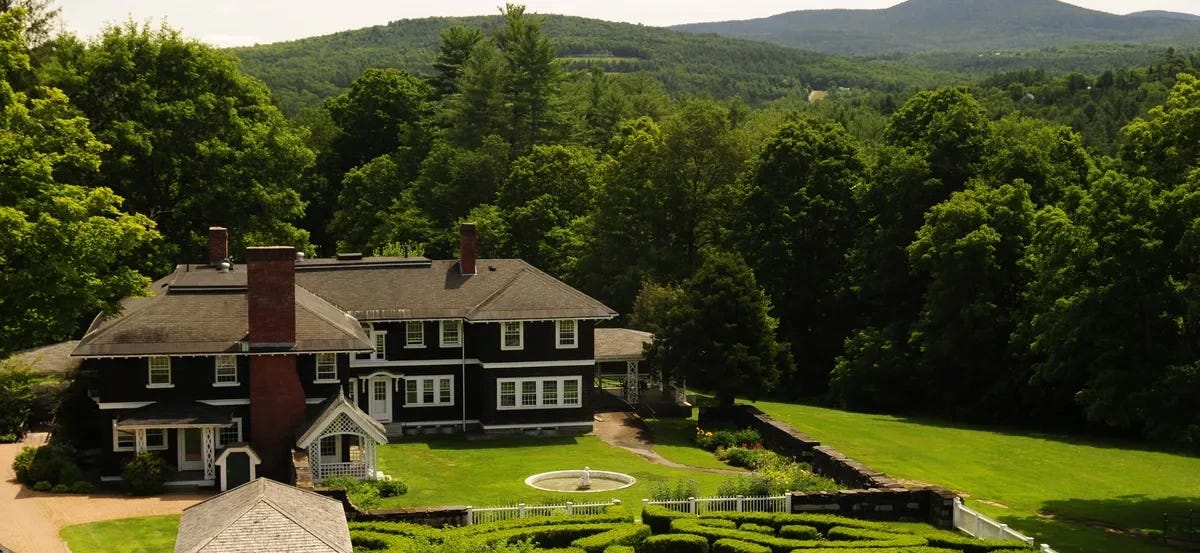
If a great physical retreat is what you’re looking for, please consider The Solstice Retreat on the Goddard College campus June 11-15 with my extraordinary colleagues Rahna Reiko Rizzuto , Elena Georgiou , and Sherri L. Smith .
A physical writing retreat is a rare gift. But you don’t need to sign up, travel, or spend thousands of dollars to reap the benefits of a retreat. In fact, I think the mark of a true writer is the ability to retreat into the writing process every day.
Maxine Hong Kingston once told me that she began writing as a child at the family dinner table — surrounded by her parents and seven siblings. Each night when she finished eating, she’d retreat to her corner of the table to write, and when she finished, she’d emerge from her mind’s haven and read to her family what she’d composed. She didn’t need to escape her family to a writing retreat; writing was her retreat.
So, what’s the magic formula for a do-it-yourself-daily writing retreat? Hint: it’s not where you go but what you bring that matters most.
Desire to write
This may sound obvious. But there are many reasons why people go to physical writing retreats, and desire to write is not always among them. They might go to rub shoulders with famous authors or learn from legendary teachers or meet agents-in-residence. They might want to feel like “a writer.” They might want to find some mystical key to crank out a bestseller.
When those motives bring people to Substack, their publications are more likely to be enterprises than havens. Nothing wrong with that, but it’s not the objective I’m talking about here.
If your publication is to serve as your retreat, you’ve got to want to write. Even when it’s hard or fills you with anguish, you still want to do it. The reward is not what you produce or the subscribers that follow, but the process of planning and thinking and writing itself. You’ll understand that reward if you view your publication as a somewhat addictive game that you get to play whenever you want. If you don’t have that passion, you’ll inevitably start to view your publication as a chore, an obligation, a burden. You’ll start to resent and hate it. Not a haven.
The same is true of your daily writing practice. It’s not what you write that matters. It’s not how “good” your pages are each day. It’s the feeling that you “get to play with language and ideas and stories.” That the act of writing is a personal privilege. That your writing life is perhaps the one place where you truly belong. Your haven and your home.
Detachment from distractions
My friend Susan Straight loves to describe the circumstances under which she’s written her many books. While folding laundry. While waiting to pick up her kids. Between her kids’ basketball games. In cars, planes, and check-out lines. On napkins, notepads, the margins of books and the back of receipts. The point is, Susan doesn’t need to get away to a special place for her writing haven, nor does she need the luxuries of time or money to make her retreat possible.
