


Hi Everyone,
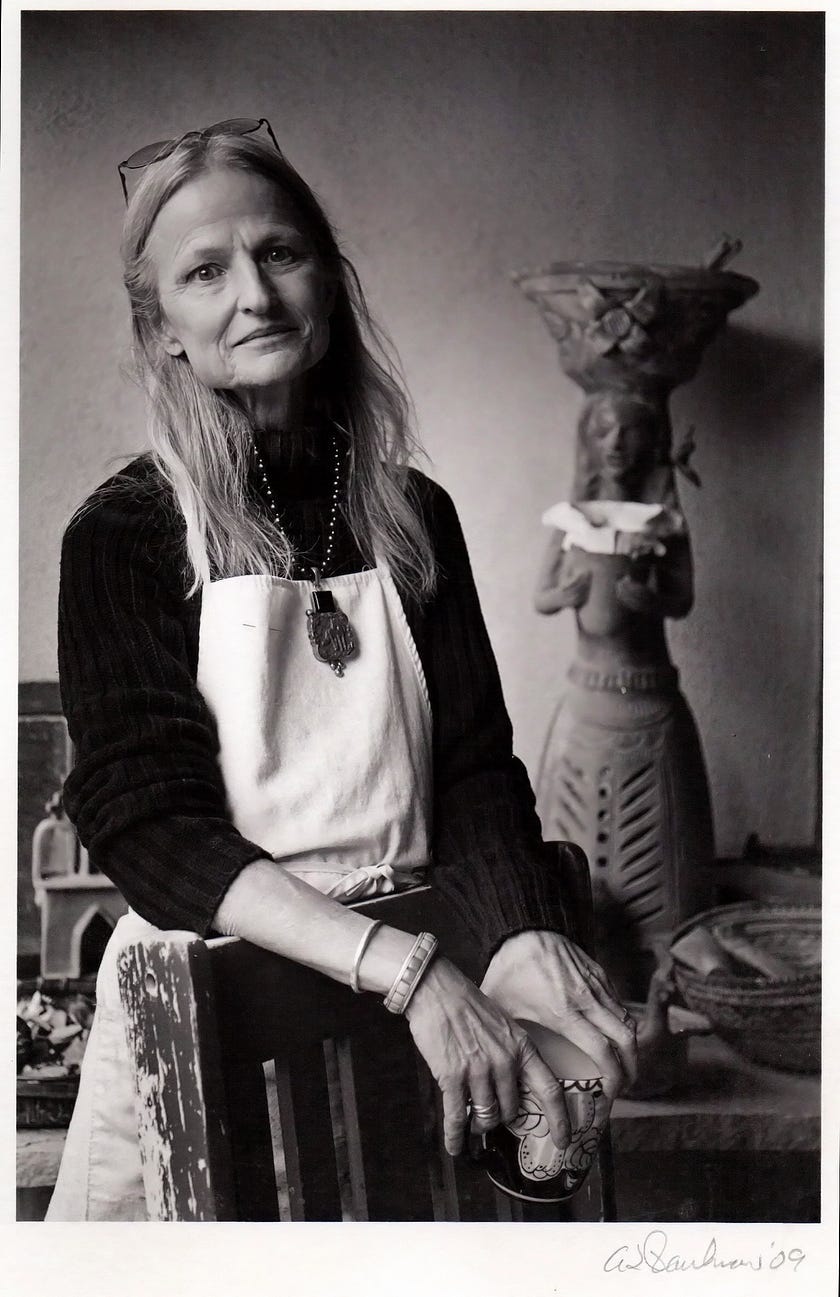
My friend Carolyn Hall Young understood the thrill of creativity before she even realized she was an artist. Her own passion was intuitive. Yet she fervently believed that creative generosity lives within everyone — and can transform society.
Carolyn’s personal motto was, Love wins. She didn’t coin that phrase, but she believed it with every cell in her determined body. She lived it. And she shared it effusively, indiscriminately, wildly. It infused her paintings and graphic designs. It strengthened her physical being. And it deepened her connections with everyone who encountered her.
Although Carolyn “left this planet,” as she would say, in 2016, the lessons she began teaching me when we were teenagers still serve as my guiding lights to this day. They remind me to approach my writing with love, to find the joy in it, to delight in the surprise of it, to focus on the art of it, and never to take it so seriously that I forget what an absolute gift it is that I “get” to create and share something meaningful, beautiful, and honest with others every day of my life.
Carolyn’s birthday is tomorrow. In dedicating this post to her, I’d like to share a little of her creative generosity with you.
Lessons from a master
The artist Carolyn Hall Young lived with stage-four non-Hodgkin lymphoma for nearly thirty years — about half her life. Yet Carolyn was determined not to let her illness isolate her spirit or disconnect her from others. Instead, she made art her conduit and generosity her current. She turned creativity into an engine of endurance powered by joy and love. And she shared this engine even with complete strangers on the other side of the globe.
I have no doubt that Carolyn’s creative generosity prolonged and enriched her life. I know for a fact that it inspired and uplifted everyone who knew her. And she was more than happy to give this infinite resource away. For she had developed her generosity over a lifetime, not just while she was sick. Carolyn truly believed that everyone is an artist at heart, that creativity can heal whatever ails you, and that the most beautiful part of any piece of writing, music, painting, or theater is the love that’s poured into it— to be shared.
Here’s what I learned from Carolyn, what I strive— often with difficulty— to practice, not only in my writing and photography, relationships and politics, but throughout my life.
1. Be grateful
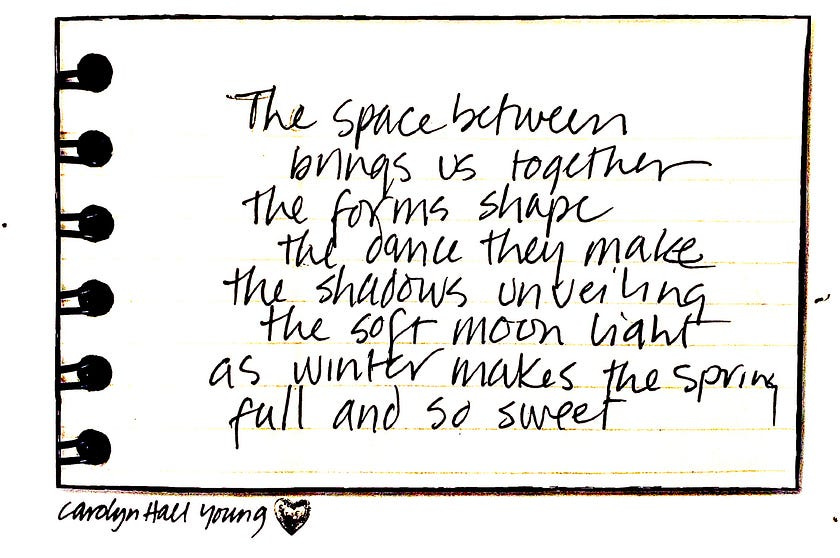
Carolyn lived by her mantra, “You never know what you’ll get to be grateful for.”

She’d learned this as an artist transforming accidents on paper or canvas into elements of beauty. She’d learned it after the failure of a first marriage left her free to find the love of her life. This mantra also saw her through multiple rounds of high-dose chemo and any number of other treatments, experiments, and ordeals that caused indescribable suffering and helped her thrive decades longer than her doctors thought possible.
“You never know,” Carolyn often repeated. “That moment may be horrible, but you’ve got to give thanks first and ask questions later.”
Of all that she found to be grateful for, love and friendship ranked at the top of her list. So she made it a priority to stay in touch with people from every era of her life. She never forgot a name, and she could tell long detailed stories about virtually everyone she’d ever known. Each of these stories honored not only her friend but also the richness of her own past. Each of these stories reminded her how much she still had to live for.
Carolyn was also grateful that she’d lived long enough to take advantage of modern communications. Even when she couldn’t meet her friends in person, she could call, text, exchange music and videos, and FaceTime. When she did connect, she demonstrated her gratitude by devoting her undivided attention to the other person. Our calls often lasted for hours, but we never multi-tasked while we were talking.
3. Be creative
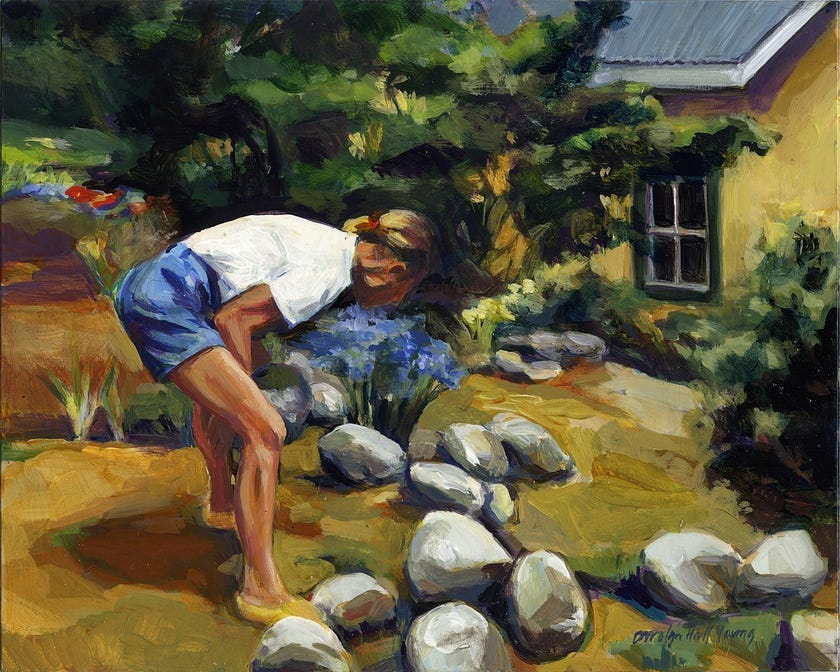
Art came naturally to Carolyn, whose creative practices included painting, drawing, cooking, gardening, and writing every day. She understood that these forms of self-expression can help fend off loneliness and depression.
That therapeutic link is the basis for The Foundation for Art & Healing‘s’ UnLonely Project, which promotes creative activities to reduce stress and anxiety and foster connection and resilience. When we create art, we engage in a different kind of conversation with the world around us. We not only express ourselves, but we invite others to respond.
For Carolyn, all art was an act of deep communication, messaging from her soul. And while she could work herself to exhaustion before a painting felt “right” or “done,” she loved that exhaustion because it meant that she was fully engaged in the work that made her feel most fully alive.
Every choice of color, shape, or form for her was like the selection of a word, metaphor, description, or idea is for me as a writer. It mattered not because of the doing but because of the potential each decision held for the transmission of meaning to another human being. Such choices are not unlike prayers. Prayers not for but of the creative spirit.
2. Be of service
For almost as long as she lived with cancer Carolyn peer counseled other seriously ill patients. This gave her a reason to keep expanding her human connections and provided a sense of hope that transcended her own physical limitations and isolation. Researchers have proven that service is an effective antidote to loneliness. It not only helps those in need; it sustains the helpers.
Carolyn understood this, and she often turned to art as a means of serving herself and others — even when the cancer patients she counseled didn’t make it.
“When someone dies,” she’d say, “I want to throw myself on the floor and wail. I want to scream and swear.” Sometimes she did just that, but then she’d turn to her box of rubber blocks and start carving four-letter words backwards and reversed, preparing to turn negative space into positive imprints of solace.
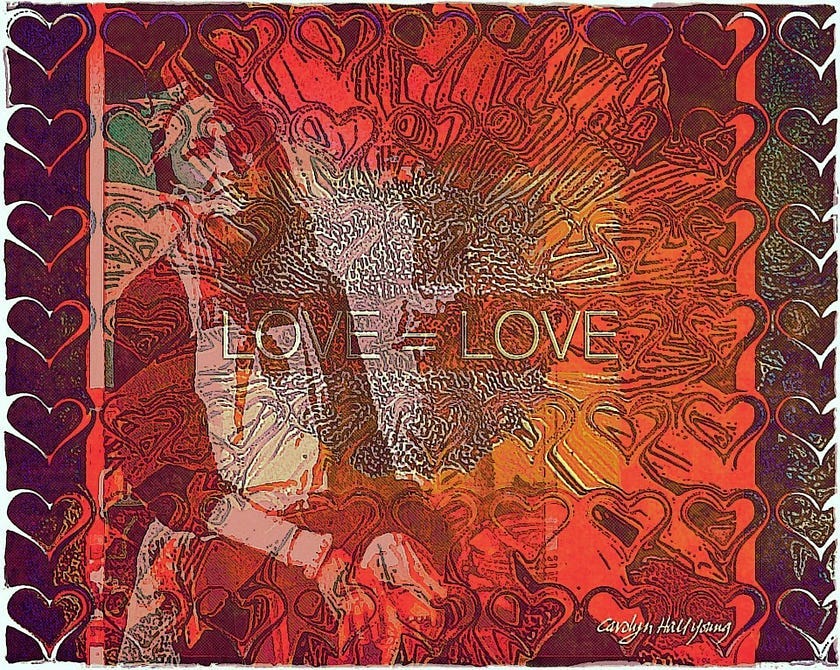
LOVE was one of those four-letter words, along with HOPE, GOOD, RISK, LIFE, CARE, GIVE, HOLD, and FEEL. Backwards and reversed, the carved words became a metaphor for her emotions in grief. But then, as she pressed the inked blocks into paper, the letters would flip and emerge restored to their desired form and order.
She’d send these printed messages of mercy to the bereaved family, and the art would bring them all together. It helped everyone.
4. Be generous
When Carolyn’s cancer progressed, the risk of infection and the loss of physical energy meant that she spent most of each day in bed, effectively quarantined. This situation would defeat many people, but Carolyn had been a pioneer in the field of car audio design, and her technical curiosity now allowed her to turn mobile digital art into a means of staying creative and connected, even when she lacked the strength to pick up a paint brush.
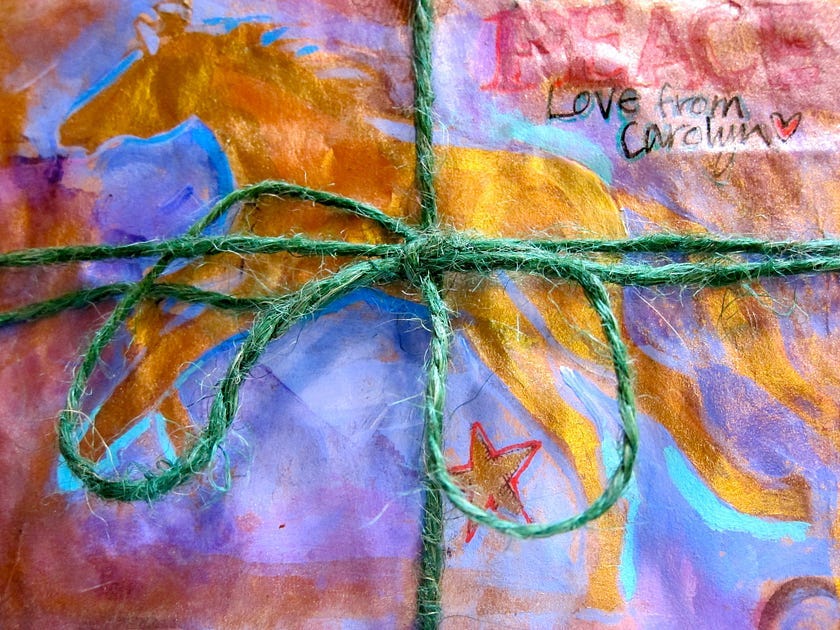
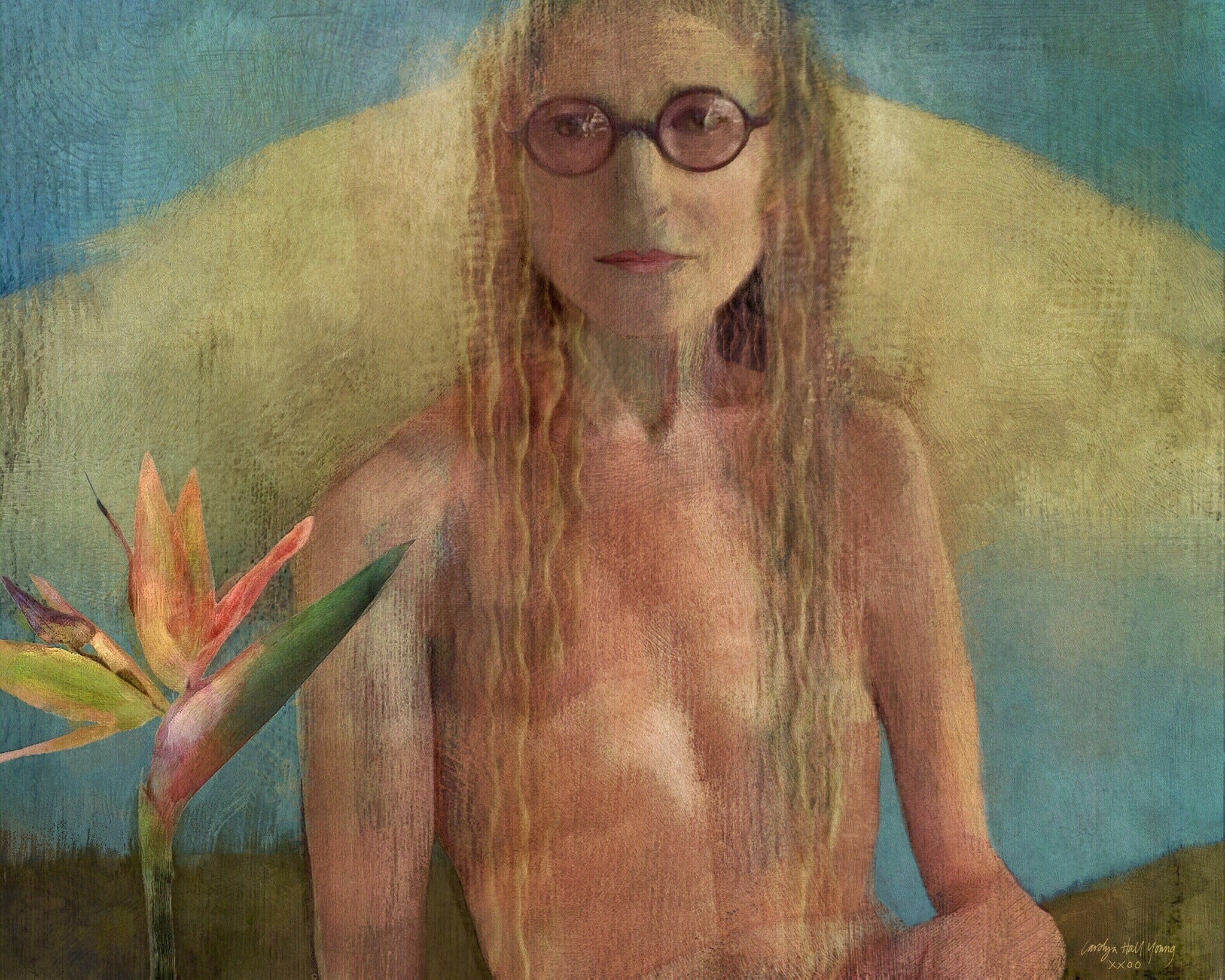
For Carolyn, the whole point of making art was to give it away. Burning her way through several generations of iPads and a multitude of mobile art tools and apps, in her last five years she produced more than 1600 digital portraits for friends and acquaintances around the globe, many of whom she’d never physically met.
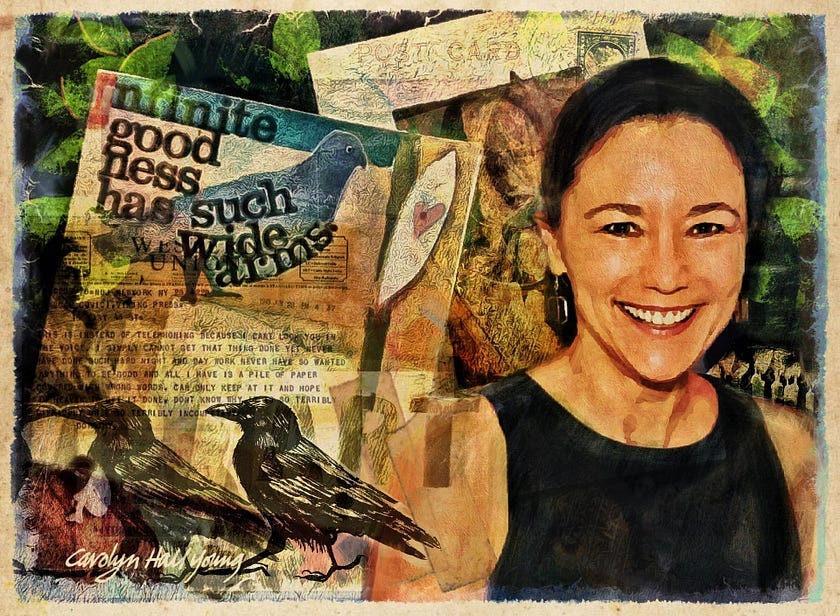
Often, these portraits incorporated elements of the person’s life that could not be photographed. The portrait that Carolyn made of me included a pigeon and lettering that spelled out the magnanimous phrase, infinite goodness has such wide arms, but also featured two black crows and a telegram from Dorothy Parker to her editor despairing about ever finding the right words. Carolyn was too keen an observer and too close a friend to leave out the challenging aspects of my nature, but in typical fashion she converted them with love into elements of grace.
Carolyn also gave her paintings to the wider world, via Facebook. Each gift expanded her global circle of friends. Even though Carolyn couldn’t travel, her work won awards in mobile digital art competitions from Kansas City to Florence, Italy. And she worked closely with app designers on multiple continents, volunteering to beta test their cutting-edge models and suggesting tweaks to improve the apps.
During the pandemic, I followed Carolyn’s example in my own fashion by creating and offering daily art photographs on Instagram. In the process I connected with a scattershot group of other writers and artists who were on the same wavelength. Then that generous soul Dinah Lenney prompted some of us to select an image and write a short nonfiction piece in response to it, and the result was a collection, Snapshots, which will be published by Bloomsbury next year!
5. Be self-transcendent
Carolyn’s gift for connection extended to complete strangers. One day, shortly after she returned home from an excruciating radiation treatment, a telephone repairman arrived to fix her phone. As he worked, he revealed that he was wrestling with some difficult life decisions. Most people in this situation would be too preoccupied with their own pain to care about the repairman’s problems. Not Carolyn.
“Ask yourself what you want,” she told this stranger. “Most people only want what they think they want. Don’t think. Feel. Whatever you truly feel you want, make that happen.”
This advice, to tap into the feeling that turns thinking into love, caused the repairman to reevaluate all of the choices before him. He was one of many whose chance encounter with Carolyn transformed his life. But that encounter helped her, too, by lifting her temporarily out of her own pain and reminding her that she was neither helpless nor suffering alone.
I’ve returned to that story so many times since she first told it to me. With her blessing, I wrote it up as fiction in a story published by Good Housekeeping. And during the long and frustrating months of the pandemic, it reminded me to reach out to neighbors, to chat with strangers, to take extra time with my students as they struggled with work, school, childcare, job loss, and seemingly endless natural disasters.
Don’t think; feel your way to the right decision.
What Carolyn ultimately modeled and fostered was a sense of belonging. To each other. To the world. To our art. And to ourselves.
Love truly can, does, and will win — if we allow ourselves fully to experience and to share it.
Very moving. Lots to think about. Lovely painting of you.
Thank you.