

Mine "The Gap"! McKee, Aristotle, and the Art of Surprise in Storytelling
Dramatic Propulsion requires a formula for surprise that's not simple


The substance of story is the gap that splits open between what a human being expects to happen when he takes an action and what really does happen… This gap is the point where the subjective and objective realms collide, the difference between anticipation and result, between the world as the character perceived it before acting and the truth he discovers in action— Robert McKee, Story
Hello Loreates,
I know, I know. The world is getting grimmer by the day. And this weekend would be particularly nauseating were it not for the resistance movement’s Rise Up, Sing Out parties happening across the country tomorrow. I’m going to one here in LA. If you’re looking for a party near you, go to NoKings.org . And keep the faith. We cannot afford to give up. There’s simply too much at stake.
ALSO…If you’re a paid subscriber and want to attend today’s Loreate salon but haven’t RSVP’d in the chat, please message me before 9:30amPT this morning so I can send you our zoom link.
Meanwhile, we write. I hope you enjoyed last week’s dive into my story structure notebook. If you missed it, have another look here:

I asked if anyone wanted further clarification on any of the pointers mentioned, and Amy Brown asked for more about Gaps— an extraordinarily important concept. So I’ll devote this post to that request, while it’s fresh. [FYI, in a future post I’ll take on McKee’s Negation of the Negation.*]
Read on!
Aimee
If anyone else has special requests, please remember to leave them in a comment. I’m always looking to address the topics that you need most!

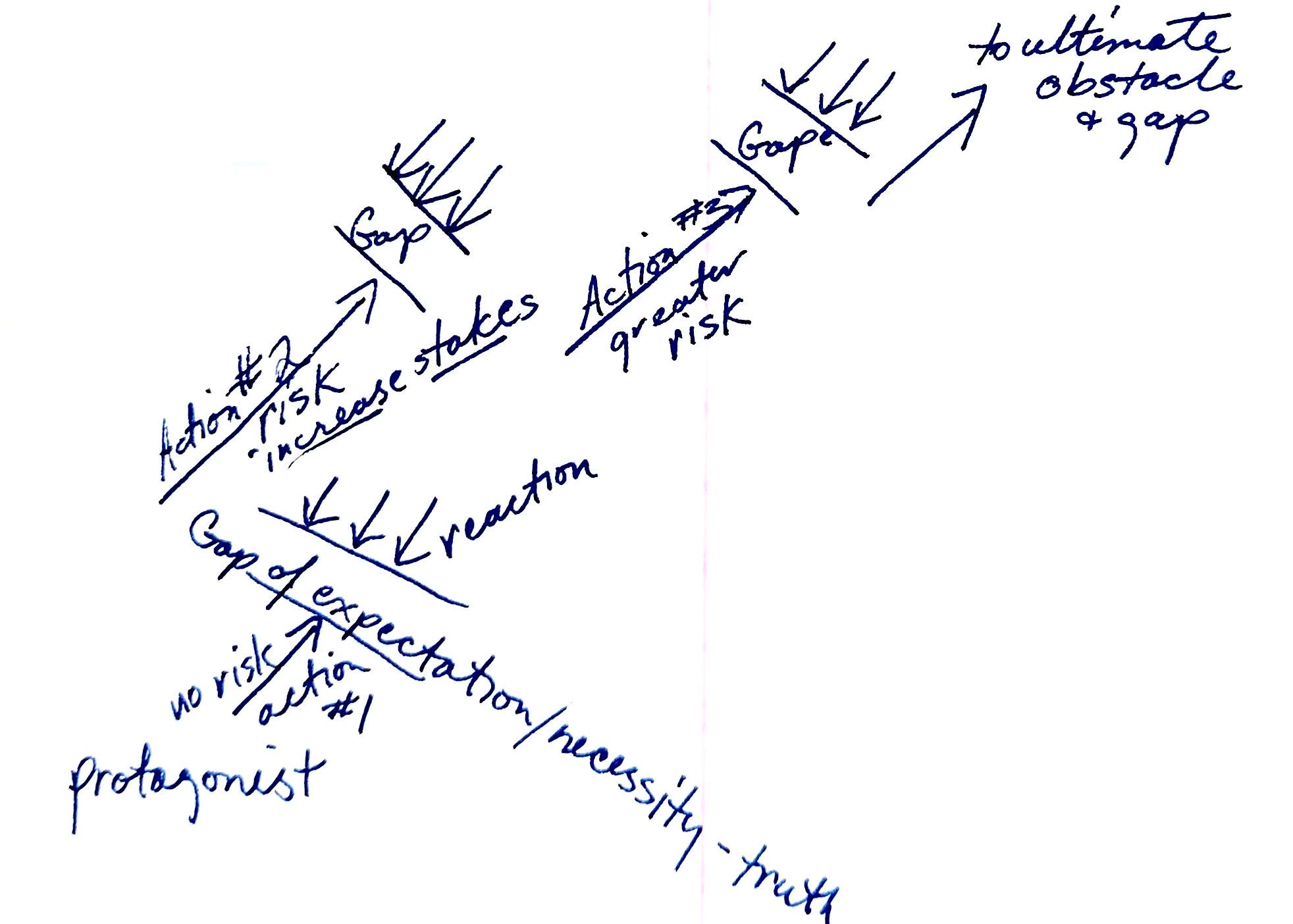
Every human being acts, from one moment to the next, knowingly or unknowingly, on his sense of probability, on what he expects, in all likelihood, to happen when he takes an action—Robert McKee, Story
Mine the Gap
Robert McKee’s explications on story structure are dry, didactic, and dull. They are also spot on. He stole his insights from Aristotle, after all, and the old Greek knew his stuff:
Tragedy is an imitation not only of a complete action, but of events inspiring fear or pity. Such an effect is best produced when the events come on us by surprise; and the effect is heightened when, at the same time, they follow as cause and effect. The tragic wonder will then be greater than if they happened of themselves or by accident; for even coincidences are most striking when they have an air of design.— Aristotle, Poetics
What McKee labeled The Gap is the difference between cause and effect in Aristotle’s formula for surprise. The greater the Gap, the bigger the surprise and the more pressure on the characters to change course. The larger point here is that stories require characters to continuously act and react in ways that produce unexpected, galvanizing, and meaningful change.
As Aristotle cautioned, unexpectedness alone is not enough to power a story. If your character walks through a hall of mirrors that produces a different shock around every corner and she just keeps walking like a zombie, your reader will quickly zone out, too.
