



Person-to-person hand-selling books is still the top way to get books sold—real human interaction.
Hello Loreates,
I’d like to introduce you to book publicist Cassie Mannes Murray of Pine State Publicity. I invited Cassie for a conversation about book tours because this staple of book promotion is changing dramatically, along with everything else in book publishing. Quite simply, book tours ain’t what they used to be, but they are still essential and, for many authors, they’re the most fun part of book promotion. Also, if you have a book coming out next year, you need to be thinking about your tour NOW.
And, wow! Does Cassie ever have some innovative ideas for you! Before we dive in, though, here’s a bit more about Cassie:
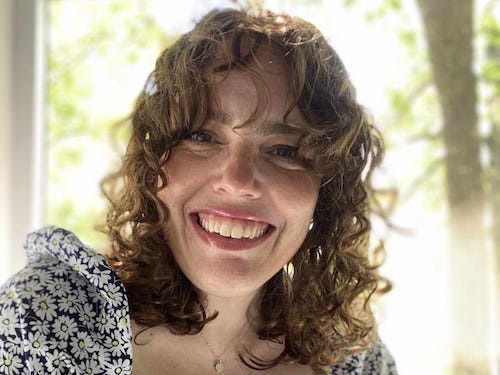
Cassie Mannes Murray is founder and director of Pine State Publicity, a full service publicity firm launched in 2022. Pine State books have garnered global publicity coverage across media, won national awards, launched exhibitions, and fueled conversation. Working across trade houses, independent publishers, university presses, and small presses, Pine State offers a place for the entire life of a book, for every kind of author and book.
As a previous publicist for Bull City Press, former literary agent at Howland Literary and Triangle House, a graphic and book designer for Ecotone Magazine and Lookout Books, an editor for Raleigh Review, a past Board Member for the North Carolina Writers Network, current advisory board member and mentor for Lookout Books, and a writer with an MFA in creative nonfiction, Cassie understands both the granular view and 30,000 foot view of publishing.
Pine State supports writers and publishers who may seem traditionally peripheral in the larger publishing landscape. Whether that be poets, hybrid writers, genre-benders, chapbooks, small press, and Indie publishers, or mid-list authors at the trade houses, Cassie looks to promote fresh voices, cross-genre work, and artists at their debut and/or the height of their skills. She believes publicity can be innovative and affordable, and she’s hoping to work with authors and publishers who are passionate about books that may seem quirky, weird, or stylistically and thematically outside the box.

Save the Dates!
Take 5 Writing Workshop
Saturday, August 29, 9am PT/12pmET
This monthly workshop for Premium MFA Lore Subscribers allows us to take a close look at a different 5-page submission each month, tailoring feedback to the needs of each writer. To join, become a Premium Subscriber today.
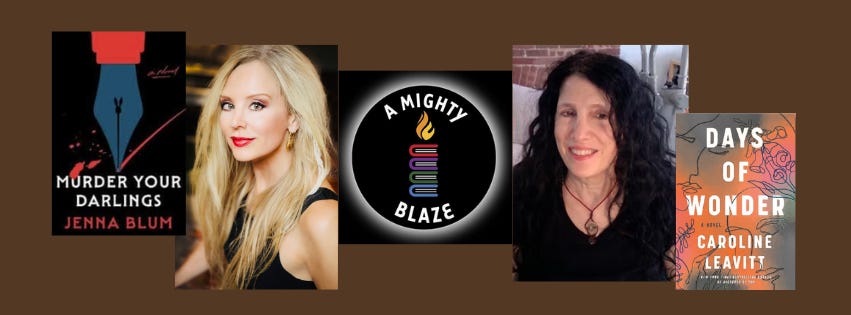
Well Published! Live with
A Mighty Blaze Founders Caroline Leavitt & Jenna Blum!
Tuesday, Sept. 1, 10amPT/1pmET
Jenna Blum and CarolineLeavittville are two prolific authors who founded A Mighty Blaze, a promotional powerhouse for authors, which continues to grow on Substack. Join us to talk about the transformative power of this literary community for authors and readers alike.
The question I’m always asking myself is: why this author and why here? If I can’t answer that, it’s probably not the place for that author to be. If I can answer that, then I pitch.
What does Book Touring mean in 2027?
I long for the old days when authors could expect a robust tour to launch their book, but physical tours with bookshop readings and local media interviews are rare now. Virtual media tours, including podcast tours and Substack tours, are evolving. And the in-person author events that do happen are changing, too. So, how do book publicists handle this shifting promotional landscape? That’s what I wanted to get into with Cassie.
Below, find my QUESTIONS and Cassie’s answers, with my two cents interspersed.
Q: WHEN YOU’RE PLANNING A CAMPAIGN FOR AN AUTHOR, DO YOU EVEN THINK IN TERMS OF A “TOUR” ANYMORE?
A: What we’re seeing across the board is that the “old model” of bookstore event tours is dying. A reading and conversation + q&a lite does not justify an audience. I don’t think it’s because people have better things to do, I think it’s because getting people to leave the comfort of their own home or their own bubble has been remarkably difficult in the last few years.
Yes, in my experience, it began with the pandemic lock-down, but the after-effects are still lingering, and the nature of in-person events seems to be changing instead of reverting to the old normal.
I love the book The Art of Gathering by Priya Parker because she thinks about the emotional tenor of live events, how they move logistically, what people are doing in the audience, how you’re building community and takeaway, and that’s just not something the traditional book tour has manifested.
When I’m planning a tour for an author, which is almost always the responsibility of the freelance publicist, since in-house teams are doing so little of this now, I think the plan needs to be much more than “reach out to the bookstore and nab a conversation partner in the city you’re going.” In this way, my thinking isn’t so much, what cities are we going to and in what order, but how are we creating community and reciprocal collaboration?
Q: BOOK STORES USED TO BE THE PRIMARY STOPS ON A BOOK TOUR, BUT IT SEEMS AS IF BOOKSHOPS NOW ARE RELUCTANT TO SET UP READINGS UNLESS THE AUTHOR IS LOCAL OR A CELEBRITY. HOW IMPORTANT IS IT TODAY TO HAVE IN-STORE EVENTS?
A: Traditional book events don’t sell books. So, in the sense of sales, it’s not super important. In the sense of legitimizing the author for their own esteem, they’re important. Folks want pictures, they want to see friends and family, they want the cheeky or thoughtful camaraderie and conversation. I get that.
But the role of the bookstore event is not just to celebrate the writer. You are using someone else’s space, time, and staff to create an event, so think of it from the bookseller’s POV: Is it worth it if you sell two books for that store?
Q: DO YOU HAVE ANY ADVICE, THEN, FOR SELECTING BOOK SHOPS TO APPROACH, AND FOR CONVINCING THEM TO HOST AN EVENT?
A: I actually heard the great agent Eric Smith say on a Hippocamp panel we shared, only go to a place for a tour where you would be happy having a small birthday party. I think this model of book events as birthday parties is a marvel, because part of planning a tour is having an actual plan.
I love it also because book events are so often reunions of old friends and invitations to make new ones— the best book events really are like great parties!
My advice is to approach bookstores with something to offer. You have to do your research and know the bookstore’s community and what they might want from you. If your book isn’t the next big romance and you’re not yet a celebrity, try to figure out a way to offer their community an event that matches their interests and boosts the store’s sales.
I don’t mean spending more money on hors d’oeuvres, I mean that the experience has to be made meaningful through a plan that is then relayed to the community. So, what’s your plan to get people in the door, to get folks interested, to create something exciting? The bookstore events teams and booksellers work hard, and many build events from the ground up, but they do not have the bandwidth to do much outreach. That’s on us.
Maybe you do a sideline event alongside a local festival that aligns with your values, so you pick up the folks who are going to the festival. Maybe you offer a workshop, a comedy hour, host an open mic, or create something new. You could bring in community partners–organizations aligned with your book’s story (mental health, grief, fertility, conservation). You could say for this hour from x to x on Saturday, “I will recommend a book to every single person that comes to my signing table” or “I’m giving out advice alongside my self-help book” — you could have a little “confessional” setup (this would actually be so fun!).
Be honest, though. There are so many little things that go into planning a truly dynamic event: is that where you want to spend your energy? Some authors are great at this and they’re really on when they’re in front of a crowd. For those authors, I think events matter. But if that’s not your jam, don’t force yourself.
Yes! For those of us who are hopeless introverts, quieter, more intimate events work much better!
Q: IN MY EXPERIENCE, THE MOST SUCCESSFUL BOOK TOURS LOOK A LOT LIKE LECTURE CIRCUITS RATHER THAN READING SERIES. I’VE FOUND THAT AUTHORS GENERALLY ARE MORE IN DEMAND IF THEY CAN TALK ABOUT THE WRITING AND BACKGROUND OF THEIR BOOKS, NOT ONLY READ FROM THEM. WOULD YOU AGREE?
A: 100%. I would be hard pressed to find a large audience for a reading that’s not David Sedaris at the moment.
Q: I’M A BIG BELIEVER IN GROUP AUTHOR EVENTS, ESPECIALLY AUTHOR LUNCHEONS ORGANIZED BY WOMEN AS FUNDRAISERS. BUT I KNOW OF NO REGIONAL OR NATIONAL DIRECTORY OF THESE EVENTS. DO YOU TRY TO BOOK AUTHORS INTO THE AAUW, BRANDEIS, ETC. EVENT NETWORKS? IF SO, HOW DO YOU GO ABOUT IT?
A: There is also, unfortunately, no national book club directory (and I don’t know that there could be unless they’re organizationally connected).

I agree about groups of authors, I agree about luncheons and fundraisers. If I’m booking a speaker circuit for an author, I’m trying to bring the organization something that I haven’t seen in their event calendar (I do scroll back through) but also fits into the events they’ve done previously. I’m writing my headline like their headlines are written. I’m writing my pitch like they write their events. I’m mimicking to make it easier for them to say yes—because it sounds like something they would put on.
The question I’m always asking myself is: why this author and why here? If I can’t answer that, it’s probably not the place for that author to be. If I can answer that, then I pitch.
Q: BOOKS THAT HAVE A SPIRITUAL ANGLE CAN BE PLUGGED INTO NETWORKS OF TEMPLES, CHURCHES, MOSQUES, AND OTHER SPIRITUAL CENTERS. DO YOU HAVE ANY TIPS FOR MAKING THESE CONNECTIONS?
A: It’s truly research and cold outreach:
What events has the center done before and with whom?
What interest groups do they have on the campus / in their network?
What do they care about, as far as you can tell from their website and promotional materials? What can you say or do that would connect with those values?
What do you bring to the table for their community?
Q: I’VE HAD MIXED RESULTS WHEN READING OR PARTICIPATING AS A PANELIST AT LITERARY FESTIVALS, LIKE THE LA TIMES FESTIVAL OF BOOKS, VIRGINIA FESTIVAL OF THE BOOK, etc. HOW DO YOU ADVISE AUTHORS WHO WANT TO GET INVITED TO A BOOK FESTIVAL?
A: They’re all different, and organization of festivals varies widely. I like to submit authors as panels, with a specific topic. I find that much easier than pitching authors one-off.
If you’re pitching yourself, do your homework and be specific. Lots of these festivals use Submittable or Airtable forms, or request a cover letter with a few copies of the book sent along. Authors need to use that space as best they can to talk through what they bring to the table, say, for the Tucson Book Festival or Miami Book Festival:
Would your book matter regionally?
What’s the connection to the locale and its people?
Who has the festival had in the past that you see yourself in conversation with?
What conversations could you have / what sorts of panels? Are these newsworthy topics, or craft talks, or just intriguing ideas?
The goal is to help the committees envision you already there.
Q: VIRTUAL BOOK TOURS ARE A WHOLE NEW ANIMAL WITH THE RISE OF PODCASTS, SUBSTACK LIVE EVENTS, ETC. ETC. HOW DO YOU GO ABOUT ORGANIZING A VIRTUAL BOOK TOUR, AND HOW DO YOU DECIDE IF A PARTICULAR ONLINE INTERVIEW IS NOT WORTH DOING?
A: So many of my authors are embracing this space, which I love. I do think we have to remember that person-to-person hand-selling books is still the top way to get books sold—real human interaction. So, I can plan an entire Substack tour (and have!) but those people then have to go out and tell their friends.
Amen! I love speaking with virtual book clubs, but so many times they read library or shared copies, and you can’t sign their editions, so there’s no real incentive for them to buy the book. Also, virtual meetings cannot replicate the excitement at a live event for the whole audience to buy a copy and chat with you while they get it personalized.
Of course, I want writers to be their most authentic selves in every space, but I think spaghetti-at-the-wall virtual tours aren’t helpful.
Podcasts are unpredictable sales tools. You can be on 55 podcasts, but if they’re not your audience and your community, or within your venn diagram, they won’t be as helpful to you as specificity. A 2k listener base can sell more copies than a 20k listener base, if the 2k podcast has a very engaged community and you’re talking about something super specific to them.
I also think intrigue is a key factor in virtual book tours—don’t give away so much that a reader is turned off from buying the book because they heard it all on the podcast! Be careful to bread-crumb without giving up the ending or whole message
Burnout is a real thing, too. More and more authors tell me they can’t do another interview, or they can’t write one more answer to x question. Pacing has to be built into the tour plan.
My NOT-worth-doing qualms are usually practical:
Are the hosts/interviewers going to read the book before talking to you?
Do they agree with your talking points?
Are they willing to send questions beforehand?
For Substack: what’s worth more here–a guest post or a Substack live?
Do you have the bandwidth to be “on” in a certain way?
Have we eclipsed a certain online community space? I know this probably sounds wild to a debut author, but Substack is a growing community and lots of people subscribe to similar writers–if you are live with three different newsletter writers in the same sort of niche (I know people are hating on this word right now, I’m sorry!)--what is each of those conversations offering you on the tour front? Will they all be significantly different enough to matter? Are you being introduced to new people?
Have we exhausted this angle of the book / is it worth continuing to pursue? I want writers to have both breadth and depth in terms of touring, so while I want overlap of communities and audience, I don’t want the writer to be stuck in just one space of the book. If it’s a memoir, talking about one scene or thread of the story over and over will just have us spinning, we need to make sure we’re hitting other ideas and strategies too.
It’s all a balancing act.

I always love hearing what Cassie has to say. And, Aimee, you asked all the right questions, while also providing so many essential insights into your own experiences.
Love this post! Cassie always has practical advice, and I always enjoy hearing from her. With a book release a month away, I loved being reminded about focusing on what's truly important.