

The Biggest Mistake We Make in America Today is to Forget The Enemy is Human
And that we can be our own worst enemy



Those automatic assumptions, blanket statements, categorical condemnations are how we become part of the problem. Demonizing whole groups of strangers as the Other. Denying justice, compassion, or even a preliminary hearing. Trusting hearsay and social media to function as judge and jury. Betraying our own moral compass.

Welcome to Writer In The World, the Wednesday section of Aimee Liu’s MFA Lore. This curated collection of free essays on the writing life is written by acclaimed MFA faculty and alumni.
Aimee’s MFA Core essays on the craft and business of creative writing will drop each Saturday. And her free Metaphortography Writing Prompts post every Monday.
As an MFA Lore subscriber you can join our community and elect to receive some or all of these sections each week.
SAVE THE DATES!
Monday, February 9, 2026, at 10am PT/ 2pm ET
Writers In The World, Live: Create to Survive
Please join WITW’s Substack Live MFA faculty reunion, as Elena Georgiou, Sherri L. Smith and Aimee Liu discuss the essential role of creativity as an engine for solace, hope, and resilience in today’s tormented world.
Elena Georgiou is the award-winning poet and fiction writer who formerly directed Goddard’s MFA in Creative Writing Program and currently teaches in the PhD program at the Rubenstein School at the University of Vermont. Sherri L. Smith is an award-winning author of fiction, nonfiction, and graphic novels for young adults and kids, and a faculty member of Hamline University’s MFA in Children’s Writing. Aimee Liu , the bestselling author of four novels and numerous books of nonfiction, helms the substack MFA Lore
Tuesday, February 10, 2026, at 11am PT/ 2pm ET
Well Published, Live: Publication via Contests
Tune in to MFA Lore’s Well Published! Substack Live series with hot new authors and industry professionals about the truths and tricks of getting… well published!
On Feb. 10, I’ll be chatting with Toni Ann Johnson , who’s won FOUR writing contests that led to publication of her books. Her next is a story collection, But Where’s Home, to be released on February 10 by Screen Door Press, an imprint of The University Press of Kentucky. Join us to find out how she did it!
Then, on Wednesday, February 18, at 6:30 pm PT
Toni Ann and I will join this fabulous online panel to talk about writing Family Secrets:


The Most Difficult Thing*
By Aimee Liu
“The most difficult thing is to remember that the enemy is human,” a character says midway through my novel Glorious Boy, “but this is also the most important… especially when I find myself being my own worst enemy.”
Captain van Dulm may be fictional, but his words have haunted me in recent years as one innocent civilian after another is murdered by Americans whose supposed duty is to “protect and serve.” Had ICE agent Jonathan Ross remembered Renee Nicole Good’s humanity, or his own, her death would likely never have happened. If police, ICE, and other security agents were trained to lead with humanity for all, the country would not be traumatized by the systemic violence that’s been turbocharged by the current regime.
Demonization of the Other drives this system. Today the definition of Other has inflated to include anyone who opposes the toddler tyrant currently occupying the White House. But if the white races had not dominated people of color for centuries by denying their humanity, then this regime would not now so unabashedly use Othering to shatter the broader promise of unity in the United States.
Historically, the promotion of racism led to the spread of empires and colonial rule. “Divide and conquer” was the single most effective strategy of the British in maintaining their grip over a quarter of the planet for more than 200 years.
So important was it that when families like mine produced children of mixed race, those children were tagged with their own color label. My father and his siblings were called Eurasian in Shanghai, where they grew up with their Chinese father and Caucasian mother. They were sent to segregated schools, forbidden from living in certain parts of the city, from entering parks for whites only. Yet when they came to America, my father was the only member of his family to keep his Chinese name and not try to pass as white. The only one, in other words, who was able to forgive himself for being Other.
This personal history informed Glorious Boy, which is set in a British Indian penal colony in the shadow of World War II. The convicts exiled to this tropical concentration camp were Indians and Burmese who dared to oppose the brutality of British rule. Who demanded to be seen as human and treated with dignity. Who were willing to fight for justice and freedom.
But there’s an even more unpleasant kicker to this story. When Japanese troops landed in this gulag, the convicts viewed them as liberators. “Asia for the Asians!” had been their rallying cry. But the Japanese did not view the Indians and Burmese as fellow humans. They viewed them as Other, just as the British had. Over their three-year occupation, the Japanese massacred these Other Asians by the thousands.
Today the Othering reflex is being weaponized just as it was during WWII. Americans are being ordered to arrest, beat, teargas, and shoot their unarmed neighbors simply for standing up for their rights. Or simply for existing as members of immigrant, nonwhite, and LGBTQ communities.
In our writing as in our lives, we can and must choose to overcome the tyranny of Othering, but as Captain van Dulm warns us, this is not an easy task, because we must first subdue it in ourselves. The habit of condemning those who look, speak, and act Different is so deeply ingrained in most of us that we judge and condemn reflexively. Especially when we are morally outraged, it’s all too easy to accuse first, and ask questions later. Control of this reflex requires informed intention and patient inquiry. It starts with a personal commitment from each and every one of us to honor and respect our own humanity by paying that humanness outward.
We can do this as writers by continually reminding ourselves and our characters to see and explore and respect those who appear to be different. We can and must reframe our view of humankind as a broad and diverse family, rather than as a narrow and insular clan.
One idea in the current moment is to demonstrate our shared humanity by exploring the stories of peace officers, National Guard, and other military service members around the country who do live up to the moral code they have sworn to uphold. Who refuse to shoot rubber bullets, throw tear gas, or wage violence against innocent civilians but, instead, try to protect them.
We have the power to encourage those who want to refuse illegal orders, who deep down believe in the principles of justice and freedom enshrined in the U.S. Constitution. Our compassion just might embolden them to join us.
Cynics will say such partnership is impossible, that everyone wearing the regime’s uniform is beyond redemption. That they are inhuman. Enemy. Other. Every single one of them.
But there you have it. Those automatic assumptions, blanket statements, categorical condemnations are how we become part of the problem. Demonizing whole groups of strangers as the Other. Denying justice, compassion, or even a preliminary hearing. Trusting hearsay and social media to function as judge and jury. Betraying our own moral compass.
It’s such an easy pattern to fall into. It’s how we got here. But if we’re ever to rise above this national crisis of division and brutality, we are going to have to come together despite our differences. And that starts with honoring— and abiding by — the humanity within ourselves.
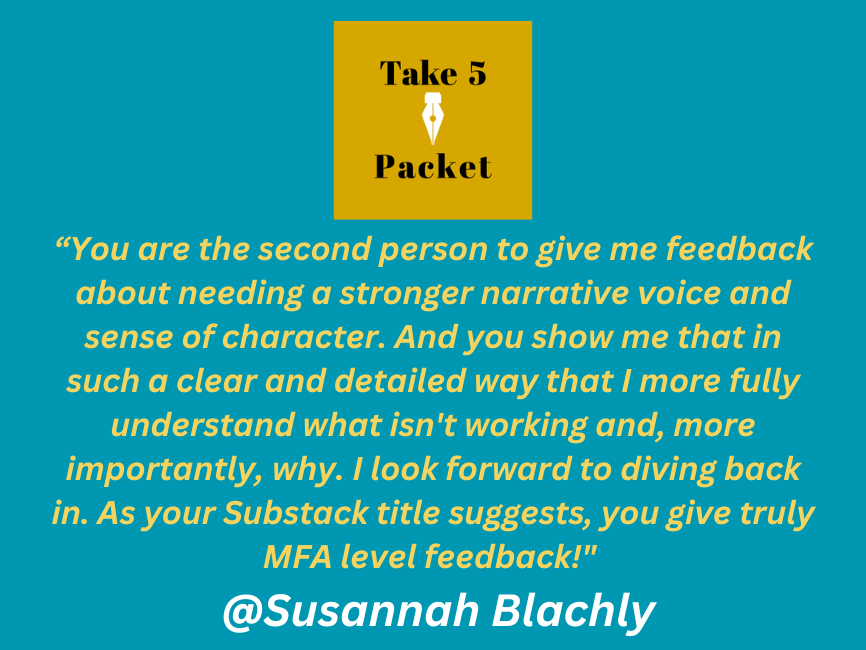
Would you like an MFA-level response to your work?
Becoming a Premium Member of the MFA Lore community will entitle you to:
Aimee’s written feedback on both your query and up to 5 pages (1250 words) of creative work, plus an optional follow-up phone call. Your “Take 5 Packet Letter” will highlight both the Strengths and the Opportunities in your work, helping you determine whether it’s time to “press send” to agents or to reorient your revision.
Monthly zoom “seminars” just for Premium Loreates.
And all other benefits of a paid subscription.
Subscribe at the Premium level or upgrade today. Details HERE.
Great piece Aimee and I remember all those stirring aspects of Glorious Boy which feel very resonant today!