The Transformative Magic of a Great MFA
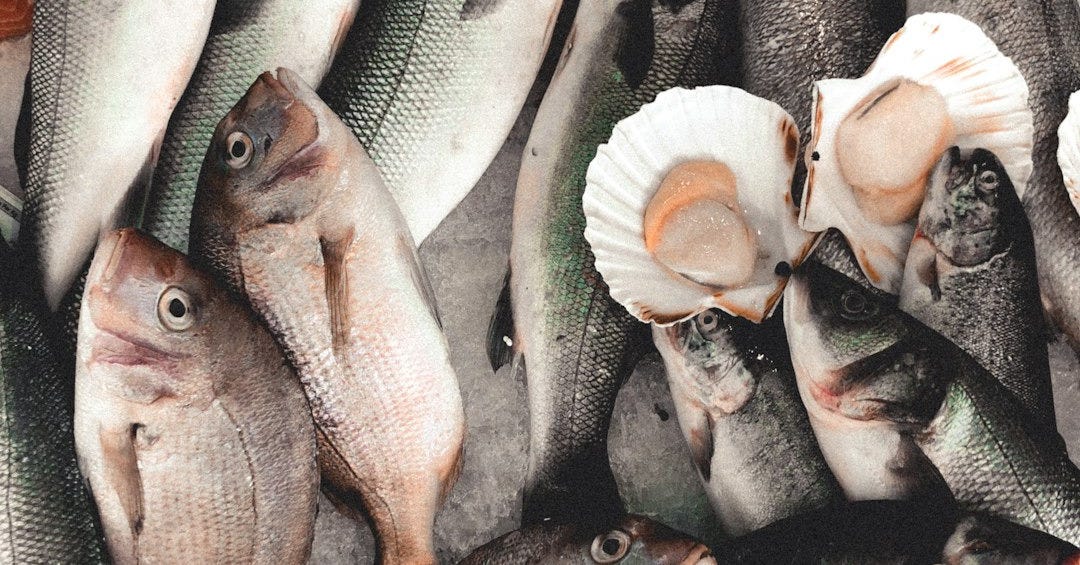
Em Bowen answers the age-old question: Why get an MFA? To learn how to tear the flesh that will catch the first "fish" of your writing life.

This week Hampshire College announced that it would close at the end of this year, due to dropping enrollment and rising costs. Goddard College folded for the same reasons in 2024. Today’s post by Em Bowen is a reminder of the wonder and value that we lose every time one of these progressive institutions dies.
Welcome to Writer In The World, the Wednesday section of Aimee Liu’s MFA Lore. This curated collection of essays on the writing life and videos of Writers in Conversation is produced by acclaimed MFA faculty and alumni.
Aimee’s MFA Core essays on the craft and business of creative writing will drop each Saturday. And her free Metaphortography Writing Prompts post every other Monday.
As an MFA Lore subscriber you can join our community and elect to receive some or all of these sections each week.
The woman cuts a strip of flesh from her own thigh to catch the first fish and so we the writers must start with ourselves. If you do it the right way, if you analyze the parts of the whole—all your guts, as my friend Gregg might say—you end up somewhere else and you didn’t fucking ascend to get there. You dug, you climbed, you swam, you tore.
Catching the First Fish*
by Em Bowen
“When transcendence of our personal history takes precedence over intimacy with our personal history, spiritual bypassing is inevitable.”
-Robert Agustus Masters
For a second, I thought I would die on the front steps of city hall in Montpelier, Vermont. It was the winter of 2014 and only minutes before, I was warm and snug on a Greyhound bus, headed to my first Goddard residency. I’d traveled to Boston to spend New Year’s in a romantic relationship that I had to close my eyes to stay in and in that spirit of unknowing and blindness, assumed that the capital city of any state was sure to have a bus stop.
Wrong. Wrong in my Arizona-livin’ Mom’s department store pea coat. Wrong in my Justin Roper cowboy boots. Wrong with my now frozen hand that I’d ungloved from my stupid Walgreens mitten in order to call the taxi company. “Half an hour away,” the man on the other end of the line said. Oh, God—I can’t wait that long, I thought.
It’s funny to think about now. In Tucson, where I hail from, it sometimes snows for a night in the winter. School is canceled. Tucsonans can’t drive over patches of ice that sometimes occur on bridges over dry river beds. Snow comes with, at the coldest, twenty-five degrees above zero temperatures. It’s all melted away by mid-morning. Like it never happened.
When the taxi guy realized I was out, in Southwest chic, in a negative double digits winter night at the steps of city hall, he told me where the police station was and to go fast. I ran. Tromping through the snow until I arrived, breathless in the lobby. A cop stared at me from behind the glass.
“Are you okay?” she asked.
“I’m fine,” I gasped, “I’m from Arizona.”
The person on the podium was who I had come to be and I was just starting to get the sense of who this person actually was. For all that work, I was finally certain that that this whole writing thing was a little bit in—and out of my hands.
At the end of that first residency I found myself in the Manor Oak room taking former Program Director Paul Selig’s “Writer’s Healing Workshop.” It’s fair to say I didn’t know what I was in for. Had I known that Paul was also a medium and that he channeled a consciousness, a group of voices who articulated in Old English, I may have built some walls around what came next. But I didn’t know, so in delightful naiveté I found myself cracked open when suddenly something said in that room got into me.
Up to that point I was fairly certain that I was alone in the world. A sense of the great beyond left me completely when I stepped into my queerness after a lifetime of Christianity. I no longer looked up to the stars at night because it didn’t feel like any of it was for me anymore. So you can imagine, stepping out of that room, having felt something—I was ecstatic. I’m free, I thought. Life is going to be so much easier now. I was right—and wrong. I struggled during my time at Goddard. I renovated my insides like you might an outdated kitchen. Stripped clean. I’d go to use what was once the coffee grinder of my internal being and panic when it was not where I had left it. I did not write all those “intelligent, queer theory essays” I thought I’d write. Instead, I wrote about myself. I was the I in my very personal essays and I was messy, annoying, stupid, and weak at times. I was a fool and a show boater. I had hurt others, myself included, and now I would figure out why. I was not alone in this.
That’s the good thing about what I consider good writing. You can’t bypass to do it. Annie Dillard tells a story in The Writing Life about an Aleutian mother who survives with her young child for a whole winter on fish she catches from entrails of other fish. Dillard writes, “How do you catch the first fish?” The woman cuts a strip of flesh from her own thigh to catch the first fish and so we the writers must start with ourselves. If you do it the right way, if you analyze the parts of the whole—all your guts, as my friend Gregg might say—you end up somewhere else and you didn’t fucking ascend to get there. You dug, you climbed, you swam, you tore.
Two and half years later, I was standing at the podium in front of the Haybarn Theater at Goddard’s Vermont campus about to give my two minute MFA graduation speech and I realized that I knew only a couple of things for certain.
One: I was certain that every hypothetical monologue I’d given to this audience I was now actually standing in front of—the long-winded, noble sounding, poignant combinations of words thought while running, while hiking, while driving my car and listening to some song that stirred up my more reverent and dramatic tendencies—was not going to happen.
Two: I was certain that I’d moved through something; actually touched it, had been in it, was now moving out of it, yet I didn’t need to understand exactly what it was that I’d done. It was that I’d moved and that pieces had been moved within me. I’d traveled through the versions of myself I was too young or too hurt to notice. The person on the podium was who I had come to be and I was just starting to get the sense of who this person actually was. For all that work, I was finally certain that that this whole writing thing was a little bit in—and out of my hands.
Em Bowen (he/him/his, they/them/theirs) is the former Executive Director of the Tucson Poetry Festival, a PhD student at the College of Education at the University of Arizona, a bilingual Waldorf educator, a storyteller, a writer, an essayist, a poet and a person who thrives and is always changing (much as we all are, whether we realize it or not). Their work has been published in the Tucson Weekly, The Atlantic, Zocalo, Wild Gender, The Feminist Wire, and most recently live on the stand-up comic stages of Tucson. Em earned their MFA from Goddard College and is the former producer of the Tucson Gender Identity Project.
Would you like MFA-level feedback on your work?
Benefits of a Premium Subscription to MFA Lore include membership in the Take 5 MFA Lore community. This will entitle you to:
Written feedback on both your query and up to 5 pages (1250 words) of creative work, plus an optional follow-up phone call. Your “Take 5 Packet Letter” will highlight both the Strengths and the Opportunities in your work, helping you determine whether it’s time to “press send” to agents or to reorient your revision.
Our exclusive monthly zoom writing workshop, just for Premium Take 5 Loreates.
Full access to paid posts and MFA Lore archives, and all other benefits of a paid subscription.
Subscribe at the Premium level or upgrade today. Details HERE:
* First published in The Writer in the World September 28, 2016.