



“We’re always looking for potential and really excited to work with authors to bring pieces into the best form possible... that is how we see our jobs.”
Thank you to everyone who tuned into Well Published! live with Jennifer Acker, founder and editor in chief of The Common literary journal. Our conversation was rich and far-reaching, from the grit that it takes to launch a writing life, to the stamina it takes to start a world-class literary journal like The Common and the unique combination of experience and imagination it takes to write exceptional fiction.
Watch the full recording above, and scroll through the takeaways below, including Jennifer’s tips for submitting to literary magazines!
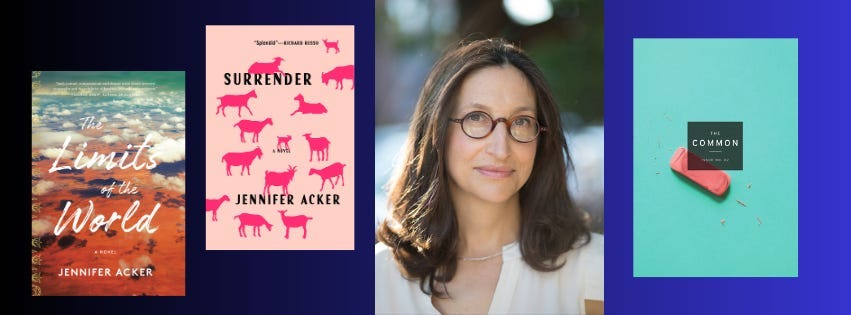
Jennifer Acker is a writer, editor, and translator. She is founder and editor in chief of the global, award-winning literary magazine The Common. Her debut novel, The Limits of the World, was a finalist for the Massachusetts Book Award. Her memoir “Fatigue” is a #1 Amazon bestseller, and her short stories, essays, translations, and reviews have appeared in the Wall Street Journal, Oprah Daily, the Washington Post, Literary Hub, n+1, Slate, and Poets & Writers, among other places. Acker has an MFA from the Bennington Writing Seminars and a BA from Amherst College, where she directs the Literary Publishing Internship and LitFest. She lives in Western Massachusetts and Portland, Maine. Her second novel, Surrender, will be released in April 2026.
Well Published! is a live video series from MFALore.com
Every few weeks Aimee interviews prominent authors, editors, literary agents, and other book industry professionals about the experience of getting… well published!
For archived video conversations visit Well Published! at MFALore.com:

Well Published! Takeaways* from Writer & Editor in the World Jennifer Acker
Jen is Founder & Editor-in-Chief of The Common | Author of the novels Surrender and The Limits of the World
My conversation with Jen Acker ranged across her path into writing and publishing, the making of her new novel Surrender, and the decade-plus project of building The Common into one of the country’s leading literary journals.
Jen’s Tips for Writers Submitting to Literary Journals
Start with the short forms. The Common‘s online-only “Dispatches” — short place-based essays or poems — are, in Acker’s words, the easiest way into the magazine.
“If anyone is obsessed with some place and wants to write a little essay about it, I highly recommend you send us that work.”
Study a journal’s actual editorial vision before you submit. Every magazine has its own “M.O.,” but not every one makes it easy to find. Submitting smart means figuring out what a journal is actually looking for, not just sending blind.
“It’s sometimes hard to figure out really what the M.O. is of a different magazine... I really appreciate the Common because it is—you make it so clear.”
Make your sense of place work for the piece, not against it. At The Common, place isn’t a rigid checkbox, but it does need to feel essential. Editors will sometimes ask a writer to strengthen that element if the piece is otherwise strong — but a piece that can’t accommodate it won’t be a fit.
“We do really want the place to be palpable in the pieces that we publish.”
Know that your work is being read closely, even if it takes a while. Every submission passes through two volunteer readers before reaching an editor, and only editors reject — nothing is turned down without that level of attention. That thoroughness is also why response times can lag.
“Editors are the only ones who reject... which is why we’re a little bit behind on our queue. If anyone else is waiting, we are very sorry, but it’s because we’re really reading.”
Expect real editorial engagement if a piece is accepted. Acker frames heavy, collaborative editing as a hallmark of the magazine — writers should come in ready to work with editors toward the strongest version of the piece.
“We’re always looking for potential and really excited to work with authors to bring pieces into the best form possible... that is how we see our jobs.”
For events like LitFest, a personal pitch goes further than a formal application. The Common‘s literary festival runs by invitation rather than open application, so authors and publicists are better served making a direct connection with Acker than searching for a submission portal.
Jen on building a writing life
There’s no linear path into a writing life — you take what you can get.
Acker’s early career was a patchwork of paid and unpaid literary work: a college magazine, a post-grad fellowship, $25 book reviews for Publishers Weekly, and a stint at Knopf.
“It’s not a linear path, I would say... nothing is guaranteed in the world of writing, certainly not writing jobs. And so, you know, you do what you can.”
Anthropology gave her a framework for writing across cultural difference.
Her college study of anthropology grew directly out of a gap year in Kenya and Mexico, and it shaped how she’d later approach fiction about communities not her own.
“I need a lens through which to think: how do I think about these experiences? And how do I think about the ways in which my life is different from another life?”
Her debut novel was “biographical” rather than autobiographical.
The Limits of the World grew from years of research into her husband’s family history — the migration of Indians to East Africa and then to the UK or US — a story she felt hadn’t been widely told.
“I think for a lot of people, their first novels are autobiographical, and mine was very biographical.”
Working with a small press meant real creative control over the finished book.
At Delphinium Press, Acker wasn’t “just one part that gets passed along as part of a system” — she had significant say over her book jackets and hired her own designer.
“I had a lot of input, like particularly about the jackets for both of my books... I really work to make the book look in the way that I had envisioned it.”
She tricked herself into plotting Surrender by writing in present tense.
Told early in her career she lacked “narrative tension,” Acker developed a structural workaround: each chapter ends with a character decision, forcing consequence and reaction to drive the next.
“The way that I tricked myself to do it in Surrender was I wrote in the present tense... a character has to make a decision at the end of every chapter... and then they’re going to have to react to those decisions.”
Managing chronic illness has made her a stricter guardian of her own limits.
Living with chronic fatigue syndrome for a decade — including having to cut short her Surrender book tour this spring — has taught Acker to protect her time fiercely, both for herself and across her small team at The Common.
“Learning to say no and learning to say enough are really tricky things to do, but very, very necessary.”
Jen on creating The Common
Founding a literary magazine required “fake it till you make it” persistence.
Acker started The Common in 2008 after a mentor’s offhand suggestion, with no MFA and no book to her name — pitching literary magazine editors at AWP who mostly laughed her off.
“Some of that is like fake it till you make it. You’re just like trying to present in a way that you look like you’re doing great stuff, even if behind the scenes you’re staying up at night and tearing your hair out and wondering where the money is going to come from.”
A journal needs a clear editorial vision — especially if it’s new.
Established magazines can coast on reputation, but newer ones have to be explicit about their identity. For The Common, that identity became a sense of place, something Acker felt every writer and reader carries in some form.
“If you’re a newer generation magazine, you have to be much more explicit about what you’re doing and work a little harder to carve out your corner of the publishing world.”
Literary magazines sit near the bottom of the funding food chain.
The Common has relied on NEA grants when available, Amherst College’s institutional support, and reader contributions — but public and private arts funding for literature lags far behind other art forms, and the NEA landscape has grown harder.
“Literary magazines are very low on the priority list of funders... all of those art forms received far more funding from the private sector and from the public sector than literature does.”
Deep editorial engagement is central to The Common‘s identity.
Every submission is read twice by volunteer readers before reaching an editor, and the magazine prides itself on collaborative, hands-on editing rather than a simple accept/reject process.
“One thing that we really care about and that’s really unique about the Common is how much editing we do.”
Bonus: Watch for The Common’s new book review section!
The Common is launching a new book review initiative to help fill the gap left by shrinking book coverage elsewhere (notably the closure of The Washington Post‘s Book World) — staying true, as Jen noted, to the magazine’s sense-of-place through line.
*Takeaways AI-generated by Claude
Would you like MFA-level feedback on your work?
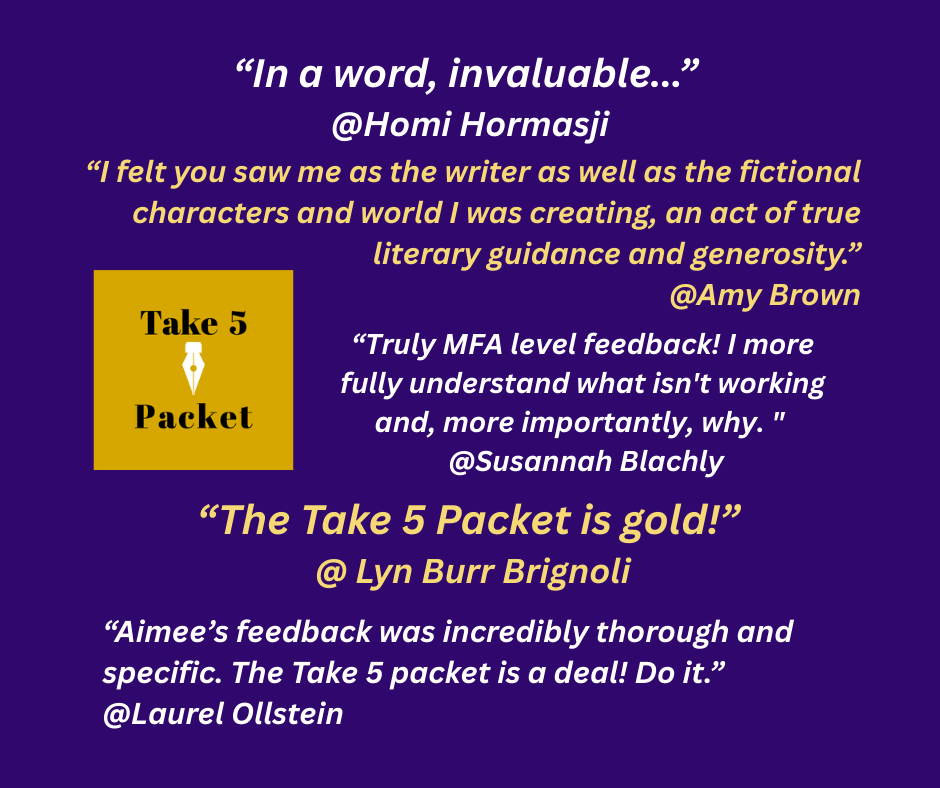
Benefits of a Premium Subscription to MFA Lore include membership in the Take 5 MFA Lore community. This will entitle you to:
Written feedback on both your query and up to 5 pages (1250 words) of creative work, plus an optional follow-up phone call. Your “Take 5 Packet Letter” will highlight both the Strengths and the Opportunities in your work, helping you determine whether it’s time to “press send” to agents or to reorient your revision.
Our exclusive monthly zoom writing workshop, just for Premium Take 5 Loreates.
Full access to paid posts and MFA Lore archives, and all other benefits of a paid subscription.
Subscribe at the Premium level or upgrade today. Details HERE:


