


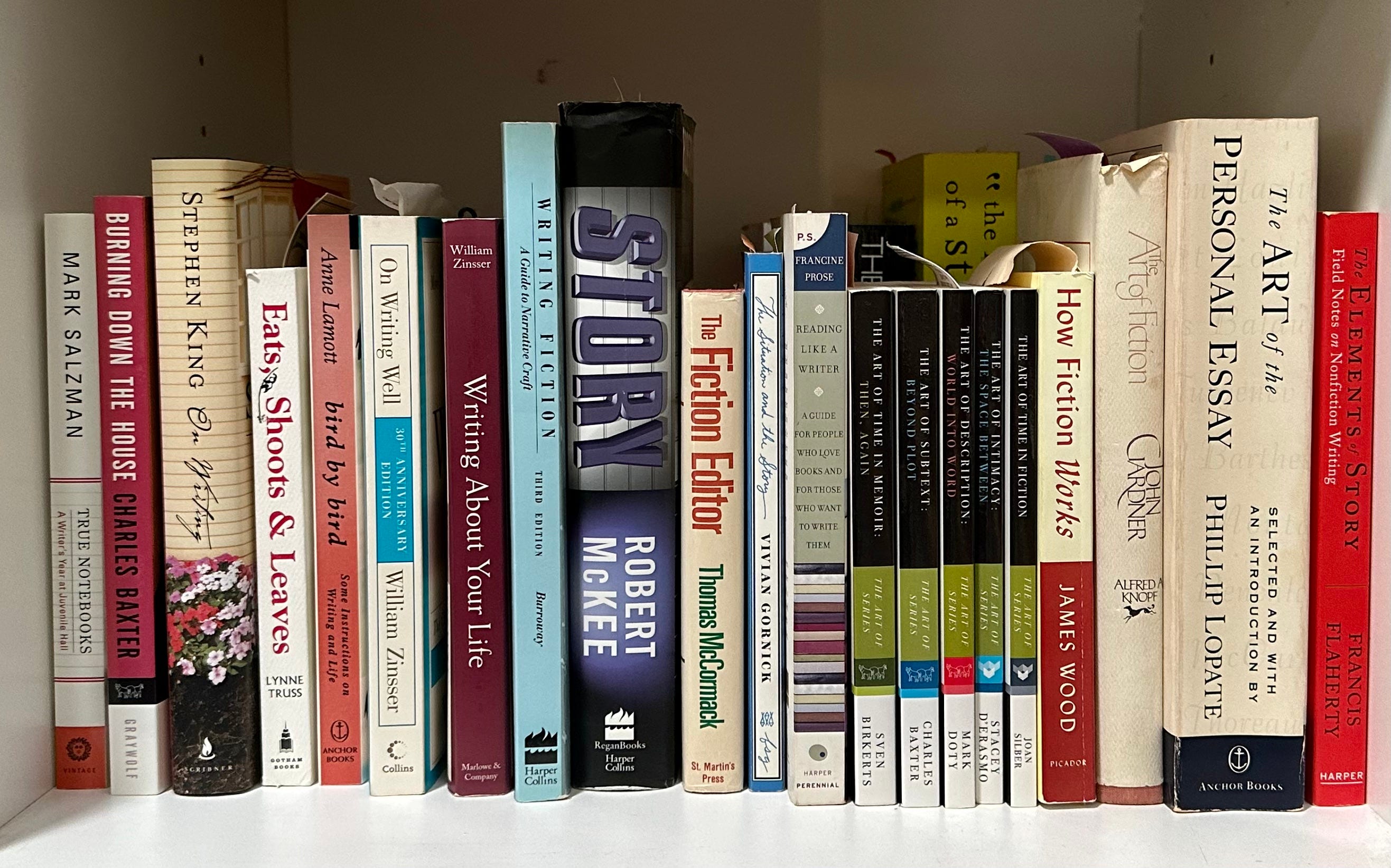
Every serious writer needs guidance. There’s no shame in turning to the pros who have come before you for guidance, advice, inspiration, secrets, or just plain basic information.
Writers love to blather on about originality and experimentation and creativity, and it’s true that every truly great book breaks new literary ground, but every great book is also built on a literary foundation that goes back centuries, and writers who refuse to access that foundation handicap their own work. You have to know the rules before you can intelligently break them.
At the same time, we all probably know writers who collect craft books as if any one of them might hold the key to literary success. These collectors often spend more time and energy reading how-to books than they do writing. Instruction can be a form of procrastination, and there are new writing craft books published every day. Not all of them are worth your time.
We’re all bound to have our favorites, of course, and I’ll confess that I’m quite fond of my own go-to selections. They’re no longer new and sparkly. Some are frankly so old that you might never have heard of them. But together they have both transformed and carried me as a writer through many book publications. And they’ve served as guiding lights for many of my students. So I thought I’d share my top ten picks for writers of fiction and nonfiction here.
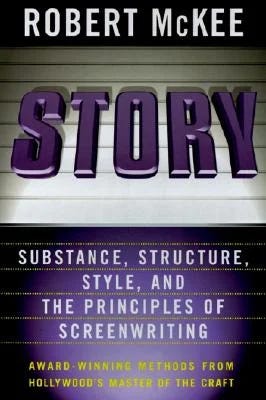
Story, by Robert McKee
The movie “Adaptation” lampooned Robert McKee, and not without reason. I attended his seminar back in the 1990s and found his act and fawning sycophants eminently lampoonable. At the same time, he ignited my understanding of the mechanics of fiction in a way that no other teacher, editor, or agent ever had before. The gist of his message is that centuries of evolution have trained the human brain to expect a certain progression of factors in stories, and storytellers must master these progressions if they are to succeed. Within a year of taking McKee’s class I’d rewritten and sold my first novel. Now his entire course is concentrated into one book, which is as essential for screenwriters as it is for fiction writers and memoirists — indeed anyone who wants or needs to tell an effective story.
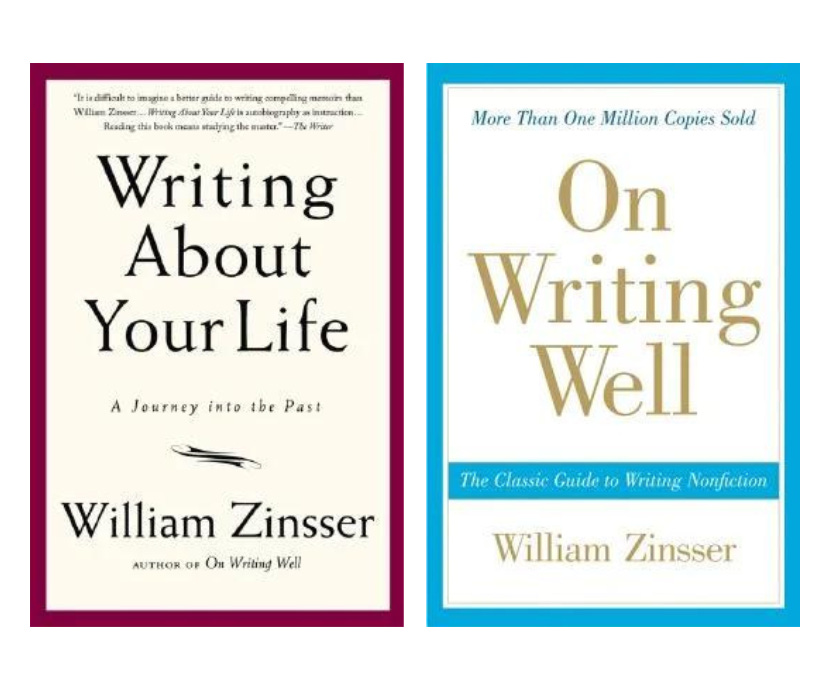
On Writing Well and Writing About Your Life, by William Zinsser
William Zinsser wrote and taught every kind of writing, from journalism to memoir. His advice is sound and straightforward, his approach kind and understanding. I recommend On Writing Well as a basic primer for everyone. And Writing About Your Life is a must for all memoirists.
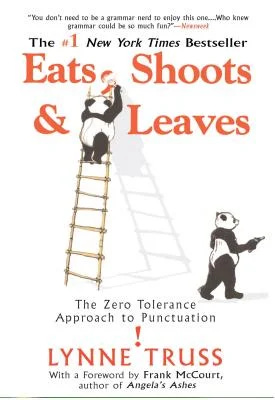
Eats, Shoots and Leaves, by Lynne Truss
Lynne Truss makes grammar funny! From vexing commas and apostrophes to pesky dashes and parentheses, this is the guide you want by your side if you’re serious about getting agents and editors to take you seriously.
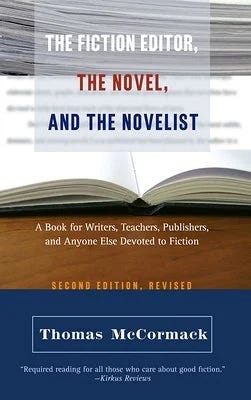
The Fiction Editor, by Thomas McCormack
How do I love The Fiction Editor? Let me count the ways. McCormack lets us into the editor’s office and gives us the tools of his trade. What’s different about this book is its quirky perspective on what makes a story effective. I’ve highlighted many lines from this book over the years. Most apply to nonfiction storytelling as well as fiction. Examples:
The enemy of fictional density is the one-thing-at-a-time scene, that simply shows you, the reader, one of the facets of the story, whether it be something about the characters or about the action or the setting, or whatever.
A story is a way to say something that can’t be said any other way, and it takes every word in the story to say what that meaning is.
Emotion serves as the binder, the fixative. Without this emotive supplement, lessons and insights may be clear but unembraced.
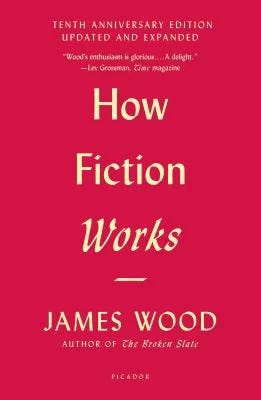
How Fiction Works, by James Wood
If McCormack is quirky, Wood is erudite. Wood’s insights are denser and require a bit more work to unpack, but once you grok them, they’re invaluable. E.g. Wood’s explanation of free indirect style* turned on many a lightbulb among my MFA students. Wood provides helpful examples from literary classics, from Homer to Flaubert.
Free Indirect Style:
We see things through the character’s eyes and language but also through the author’s eyes and language. We inhabit omniscience and partiality at once. A gap opens between author and character, and the bridge — which is free indirect style itself — between them simultaneously closes that gap and draws attention to its distance.
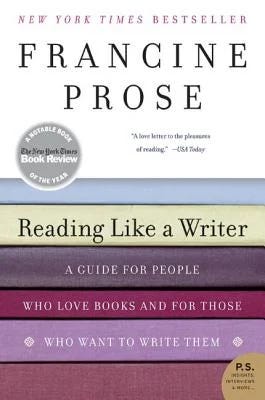
Reading Like a Writer, by Francine Prose
Every MFA student knows that close reading holds the ultimate key to a writer’s education. Francine Prose has helpfully produced this book to guide us through the mental exercise that goes into close reading like a writer. Each chapter in this book is an exceptional example of the type of long annotation or critical essay that you’d be expected to write for an MFA program. Underlying each annotation is the question: How did this book/writer/passage create this precise impact on the reader? Prose offers a wealth of insights into narrative construction, character development, dialogue, and much, much more.
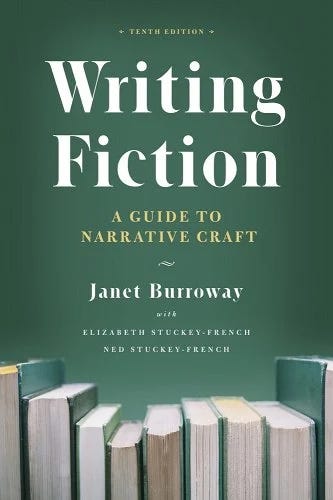
Writing Fiction, by Janet Burroway
Burroway’s comprehensive craft guide has been a classic for over three decades, and it’s still essential. What I love about this book is the patience with which Burroway guides the reader through difficult practices, like revision, with samples of manuscripts at different stages, complete with revision marks. Her explanation and diagram of clustering was incredibly helpful to me early on. And each chapter concludes with a useful writing assignment and sample reading with suggestions for discussion, so this volume makes a great handbook for teachers and writing groups.
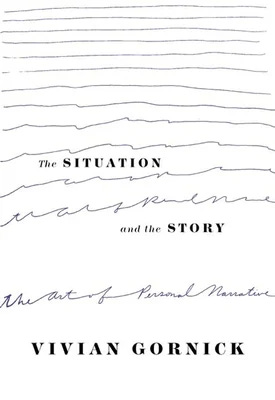
The Situation and The Story, by Vivian Gornick
This book is a must-read especially for memoirists but, again, anyone writing any kind of story should inhale it. Gornick takes a laser approach to the transformation of life’s raw material, or situation, into a meaningful story that will resonate and convince readers of its inherent truth. Gornick got skewered by some critics for “making up” a scene with her mother in her memoir Fierce Attachments. The Situation and the Story, which preceded the memoir, lays out Gornick’s defense.
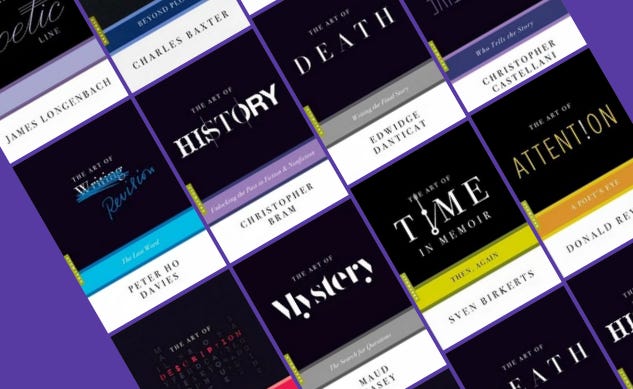
The Art of series from Graywolf Press
In a way, I’ve saved the best for last. This series is beyond wonderful, and it’s for writers of every genre. Graywolf Press has enlisted many of the smartest, most accomplished, and most helpful writers of our day to dive deep into highly specific aspects of the writing art. Among these many essential little volumes: Charles Baxter on the Art of Subtext, poet Mark Doty on the Art of Description, Maud Casey on The Art of Mystery, and my personal favorite, by my former Bennington advisor Sven Birkerts, The Art of Time in Memoir.
Of course, this list barely scratches the surface. I have dozens of other craft books in my library, as you probably do, too. I’ll throw in one last nod here, to Anne Lamott’s Bird By Bird, which I loved when I read it long ago, less for instruction than for her tender encouragement— and for the suggestion that writers should always travel with note cards!
I’d love to hear from you about your go-to craft books. AND I’d love you to share your burning craft questions for our next Write On! Roundup, which will post next week. Please ask your questions in the comments to this post or via the Chat thread below.
In the meantime, write on!

*Subscribers, remember, you control the emails I send you!
Aimee Liu’s Legacy & Lore now offers 2 Sections:
1) Chinese-American Legacy and
2) MFA Lore.
To control which sections you receive as emails, please go to your profile settings, click Subscriptions and choose Aimee Liu’s Legacy & Lore. Then, under Notifications select which sections you wish to receive (green) and which you don’t (gray).
More directions HERE.
Love this! Do you have any recommendations for books on nonfiction writing? Perhaps fodder fo a follow up post!
A number of books I haven’t read. I do love Vivian Gornick. She is a fantastic writer. I once met her and told her the story of picking up “Fierce Attachments” at a friend’s house in the Hamptons on a summer weekend some years before and could barely leave my room to do anything but read, I was so entranced. I will never forget her delight at that.