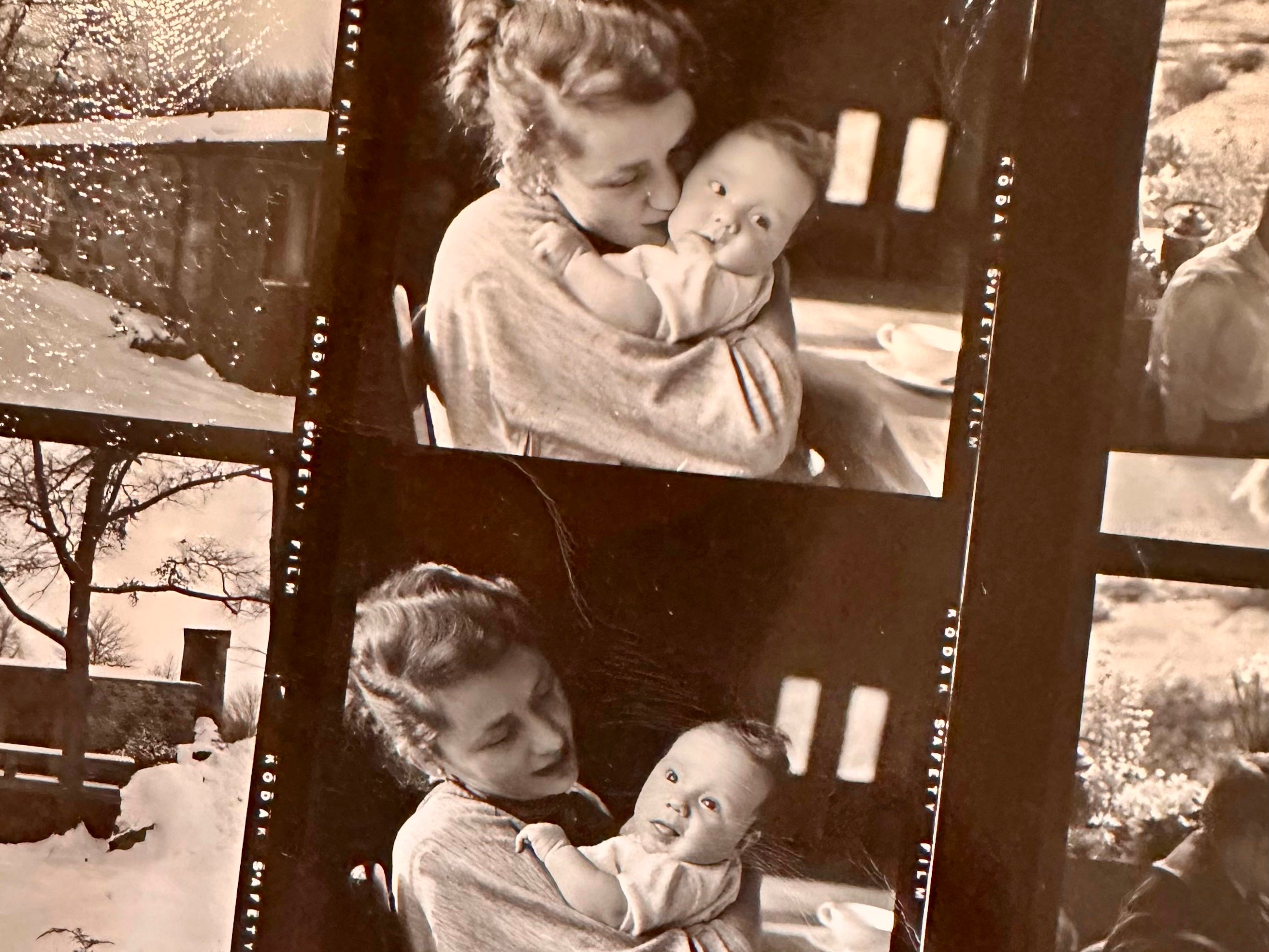
Writing Prompt: MOTHERING
Visual inspiration + mental exercise to start your writing week
Right now we all could use some good mothering. But that surely means very different things to each of us.
Hello Loreates,
I suspect you’re struggling with the same rage-grief-shock-horror whiplash that I am after this weekend’s murder of another innocent protester in Minneapolis. I’m haunted, too, by my mother’s warnings, issued when Trump was first threatening to run for president, when we in the younger generations accused her of Chicken Littling, when she told us she’d grown up among fascists and Nazis and KKK in Milwaukee in the 1920s, when she insisted they were all still here across the USA and Trump was just their type and not to be dismissed.
We didn’t listen. We rarely listened. We always thought we knew better. She was overly dramatic, had too much time on her hands, and was nearly 100 years old. What could she possibly understand about the 21st century? Far more than we did, as it turned out.
My mother died four years ago today, at the age of 101. Our relationship was no easier than most mother-daughter relationships and probably not much more complicated, though at times it seemed to me unendurable. We loved and admired and resented and feared and ached for each other. We were opposites who knew each other inside-out, which kept us tethered in mutual resistance. But she knew and accomplished far more over her long life than I gave her credit for.
She was a product of the Depression and World War II, the likes of which I was convinced we would never see again. She taught me to work and fight and vote and pay attention to make sure we never did. I’m grateful she isn’t here to witness how badly my generation and the ones after have let her down. It’s about the only thing I’m grateful for today, other than the tide of resistance that is finally, belatedly rising.
Right now we all could use some good mothering. But that surely means very different things to each of us. Hence today’s prompt.
Metaphortography Prompts are free visual and verbal writing prompts for inspiration and reflection. This is the Monday section of Aimee Liu’s MFA Lore. Our Wednesday section is Writer In The World, a curated collection of essays on the writing life by acclaimed MFA faculty and alumni. Writers in Conversation and other MFA Core essays on the craft and business of creative writing will drop each Saturday. Receive some or all of these newsletters by subscribing now:
Mothering: Middle English moder, from Old English mōdor; akin to Old High German muoter , Latin mater, Greek mētēr, Sanskrit mātṛ
giving birth to
giving rise to
caring for or protecting like a mother
Here is your writing prompt
As you contemplate the image above, consider your relationship with your own mother. Then either:
Write the conversation you wish you could have, asking the questions you never dared ask, overriding the emotional walls and constraints between you, revealing the secrets that could change everything.
OR
Write the conversation you actually did have that revealed the hidden truth of this relationship, for better or for worse.
Suggestions
Ask your mother to be as specific as possible:
What were her expectations of motherhood before having you?
How did those expectations differ from her reality?
What were her first impressions, thoughts about you when you were born?
What were her greatest joys as your mother?
What were her greatest challenges or frustrations raising you?
Where did she turn for support, and did she get the help she needed?
How did she adapt to the reality of mothering as time went on?
When you were little, how did she envision your future?
Did she feel it was her job to raise you to behave a certain way?
What and how did she try to teach you about moral goodness, right and wrong?
Did she feel that you had obligations to her, as her child?
Was she ever disappointed in or by you, and why?
How did motherhood change her goals?
What does she regret or wish she’d done differently, and why?
What’s the one thing about her that she wishes you better understood?
What’s her deepest secret, not just from you but from everyone?
What did she learn about herself from you?
What did she love most about you?
Tell your mother as honestly and specifically as you can:
Your earliest memory of her.
The most important question you never dared ask her.
Your favorite thing to do with her as a child.
Your proudest moment as her child.
Your least proud moment as her child.
Your greatest fear as her child.
Things she did that made you feel safe.
Things she did that made you feel unsafe.
What you admired most about her.
How the two of you are alike.
What made you rebel against her.
The values and beliefs that you took — and kept — from her.
What you wish you could have told her, but never did, about yourself.
What you wish you knew about her past.
Her greatest gift to you.
What you love most about her.
A special thank you to Amy Brown , Nancy Jainchill , Annelise Riles , Deborah Jones , Laura Davis , Dinah Lenney and Colette Sartor , among the many who helped to inspire this post.
Loreates’ Corner
I’m delighted to introduce you to a few of the wonderful stacks by writers in our community. Please read, subscribe, and share! And if you’re an MFA Lore subscriber with a great writing stack that I haven’t mentioned, please drop the link in a comment, so I can add you to our Corner.
Barbara Saunders writes Rhetorically Writing:
Marcia Meier writes Writing Life by Marcia Meier:
Shara Karasic writes All Over the Place: Emerging Tech, Creativity, & Culture:


Aimee, thank you for the acknowledgement. This post is a keeper. It's got me thinking so much about my mother and me.
Aimee, I was already completely enraptured by this post—so much in my wheelhouse — and then you tagged me as a source of inspiration. Thank you! I’ll not only use these questions to probe my relationship with my mom but use to to better understand the fictional daughter and mother at the heart of my novel. Thank you!