



Hello Loreates!
I want to thank Rochelle Williams, Morgana, Joshua Gershick, Leslie Li, and the many others who tuned in this week to hear Authors Unfiltered with Katie Gee Salisbury and Lauren Ling Brown and me! We discussed the power and perils of writing books for niche audiences, i.e. readers with identities and experiences that are outside the mainstream.
You can watch the whole video and access the transcript, above.
Below, I’ll recap our main take-aways.

Special announcement:
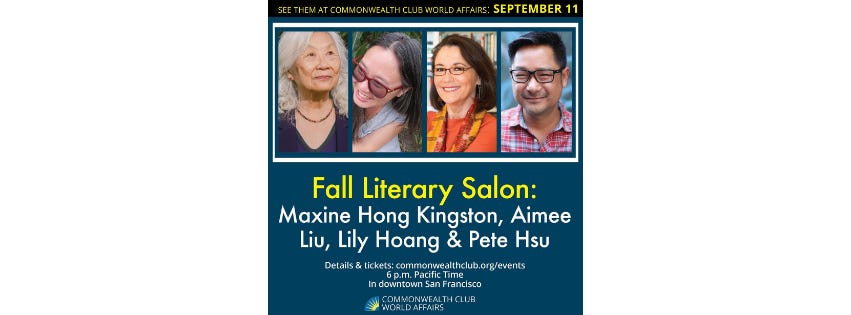
Join me virtually or in person for an evening with the incomparable Maxine Hong Kingston and Pete Hsu, moderated by Lily Hoang at Commonwealth Club World Affairs in San Francisco on Thursday, September 11, 2025. We’ll be discussing the impact of America’s current politics on marginalized writers, readers, and independent presses. Without NEA and NIH funding, what is the fate of literary diversity in America? What can publishers do to prevent erasure of BIPOC perspectives? What can artists do to defend their legacy and protect the future for imagination, creativity, and radical inclusivity? And what rich reserves of literary history can we all draw upon to embolden the voices of resistance in our modern reckoning? We invite you to participate in an urgent exploration of the good, the bad, and the courageous in publishing today.
“It means a lot to me when it inspires readers to write themselves or just to see themselves in the characters.” —Lauren Ling Brown
The Pros and Cons of Niche Writing
As authors, we always hope to appeal to the broadest possible audience. Naturally, we want everyone to read our books. But in reality, it helps to know who your readers are and sometimes to narrow your focus to better reach them. As Asian American writers, women of color, we three know from experience, there's a lot of power in niche audiences. There are also some challenges that come with with that power.
For reference, here are the niche books we discussed:
Katie Gee Salisbury : Not Your China Doll, a biography of the Wild and Shimmering Life of Anna May Wong
Lauren Ling Brown : Society of Lies, a Reese’s Book Club pick that explores secret societies, the bonds of sisterhood, and the intricacies of privilege at Princeton.
Aimee Liu : Face and Cloud Mountain, two novels based on Chinese-American family heritage, and Solitaire, Gaining, and Restoring Our Bodies, Reclaiming Our Lives, three nonfiction books about eating disorders.
The following points sum up the advantages and hurdles we highlighted.
Your Perspective Is Your Niche
Writers often discover their niche through their own experiences and perspectives rather than deliberately choosing one. Lauren found that writing about mixed-identity women comes naturally because "that's just who I am".
Successful niche writing combines specific, unique elements with familiar, accessible frameworks. Lauren paired multiracial characters (niche) with familiar thriller elements like secret societies at universities (mainstream).
Aimee embedded very specific cultural stories within broad genres like family sagas that appeal to wide audiences.
Advantages and Challenges of Niche Writing
Advantages:
Being first in a niche can create significant opportunities (media attention, speaking engagements).
Niche audiences can be deeply engaged, supportive, and grateful to see their interests and identities represented.
Internet communities make it easier today to find and connect with specific audiences.
Challenges:
There’s limited media attention for underrepresented topics.
Sometimes niche audiences don't materialize. Aimee expected promotional help from contributors to Restoring Our Bodies, Reclaiming Our Lives, a narrative guide through recovery from eating disorders, but few even bought the book.
Competition for limited "slots" in media coverage often privileges the first books on a narrow topic and punish those who publish later.
Publishers may struggle to find comparable titles and often don’t know how to market niche titles.
Finding and Connecting with Readers
Your intended audience may differ from your actual readership.
Aimee's Chinese-American family saga found success with white women's book clubs rather than Asian-American readers. Katie's Anna Mae Wong biography attracts diverse groups: Asian-American communities, film buffs, and older white male fans.
Consider where your audience feels comfortable gathering. Aimee found that readers wouldn't attend bookstore events about eating disorders due to shame, but they packed safe spaces like university women's centers.
Different venues attract different segments of your potential readership, so think broadly across your niche targets. Katie has done book events at theaters for Hollywood cineastes, at museums for Asian-American historians, and at bookstores and libraries for Anna May Wong fans in general.
Practical Advice for Writers
Genre First, Then Niche
Start with a familiar genre you love reading, then break it down. Lauren recommends creating 25-50 back-cover pitches to explore different ideas within your chosen genre
Hybrid Approaches Work
Combining familiar formats with unique perspectives can broaden appeal. Katie deliberately wrote narrative nonfiction to make Anna Mae Wong's story more dynamic than traditional academic biographies.
Evolution Is Natural
Writers don't need to stay locked into one niche forever. Katie is moving from Asian-American focused work to broader multiracial identity topics.
The Reality of Niche Marketing
Timing Matters
Being early to a niche can be advantageous, but the landscape changes over time and place. The topic of mixed-race marriage in Aimee's work seemed novel to many American readers in the 1990s, but it’s become more familiar now, and in Hawaii, where mixed-race marriages are the norm, the story never seemed unusual.
Community Building
Modern writers benefit from both virtual and IRL affinity communities that didn't exist for earlier generations. For example, Asian-American cultural centers, museums, and digital platforms provide venues for connection that weren't available in the 1990s, when Aimee’s novels were first published. Katie has been able to reach eager audiences for her book in all these venues.
In sum…
Our overarching message is that successful niche writing often happens organically when writers authentically explore their own experiences and interests, then thoughtfully consider how to make those specific stories accessible both to niche and to broader audiences.
Coming Live Attractions free @ MFA Lore:
SAVE THESE DATES for my next Substack Live conversations:
WELL PUBLISHED! Going Global, Thursday, August 28, 6pm PT, with debut novelist Juli Min, who lives in Shanghai and has a US publisher.
WELL PUBLISHED! Promote Your Book, Thursday, September 18, 12 noon PT, with book publicist extraordinaire Megan Beatie .
Loreate Salons for Paid Subscribers are now bimonthly!
By popular demand of our Zoom Loreates, we’re now going to gather online every two months on the third Saturday. This day and time seem to work for everyone from Hawaii to Switzerland, so…
Our next Paid Loreate Zoom gathering is Saturday, September 20, at 10amPT!
All paid subscribers are welcome. As we get to know each other, these gatherings will be less meet-and-greet and more discussion of the thorny issues bedeviling our collective writing life. Consider this online space our Loreate Salon.
Would you like an MFA-level response to your work?
Becoming a Premium Member of the MFA Lore community will entitle you to Aimee’s written feedback on your query and up to 5 pages (1250 words) of your creative work. Your “Take 5 Packet Letter” will highlight both the Strengths and the Opportunities in your work, helping you determine whether it’s time to “press send” to agents or to reorient your revision. Subscribe at the Premium level or upgrade today.


